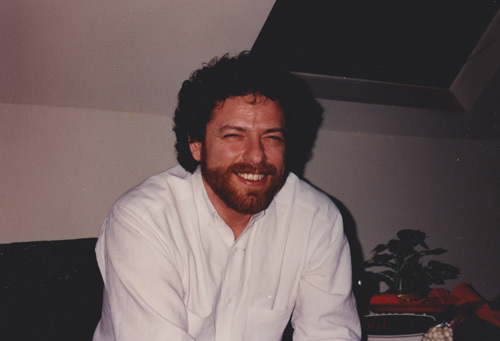
Michael Sporn was one of the giants of the New York animation community. From 1980 until his untimely death last year, Michael Sporn’s studio produced many acclaimed television specials, most of them animated entirely here in New York.
To commemorate the first anniversary of his passing, ASIFA-EAST is hosting an evening of Tribute to Michael Sporn–and we’re encouraging members of the animation community to contribute to a tribute reel to be presented at the event and preserved online.
ASIFA-East Tribute to Michael Sporn
Monday, March 2, 2015
6:30 pm – 9:00 pm (doors open at 6:00 pm)
SVA Theatre [Beatrice]
333 West 23rd Street (between 8th & 9th Ave.)
New York, NY
(no RSVP required)
For the tribute reel we are inviting anyone to participate and send their personal message about Michael, his work, what he means to you, his animation, whatever you feel moved to say. You can write, draw, paint, photograph, GIF, audio record or videotape your message. Please email your tribute to asifaeasttreasurer@gmail.com by next Friday, February 20.
Please join the others who knew him, worked with him, and read “Splogâ€â€“his celebrated blog to look back at his foot prints and keep his legacy alive for the future.
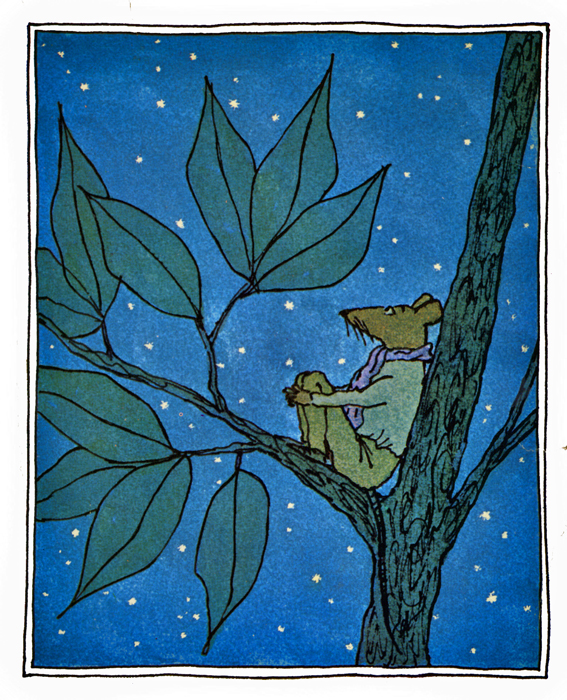
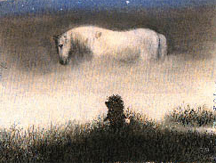
Today in Hollywood, Tom Sito and Yvette Kaplan will represent Michael at the Animation Day of Remembrance. Tom and Michael go all the way back to 1976 and Raggedy Ann. Yvette met Michael at The Hubley Studio here in NYC. I have requested that they include Ray Kosarin’s superlative memorial to Michael and his studio. It was written by Ray for Michael’s Memorial Celebration at the AMPAS Lighthouse screening room on March 31, 2014. Tom asked me if he could use the Michael’s rendering of the mouse, Abel, talking to The Star from Abel’s Island by William Steig for the program cover. I said, “Absolutely!” Both Tom and Yvette will be speaking. Michael would have been very pleased to be represented by such artists and friends. Tom will be sending some pics of the event that I will post later.
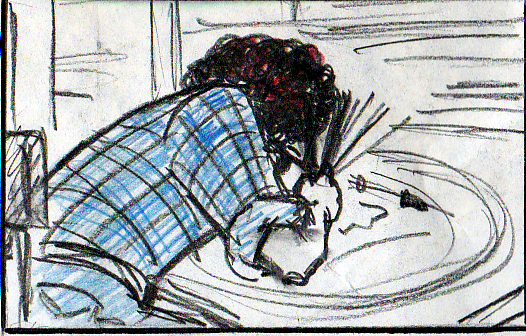
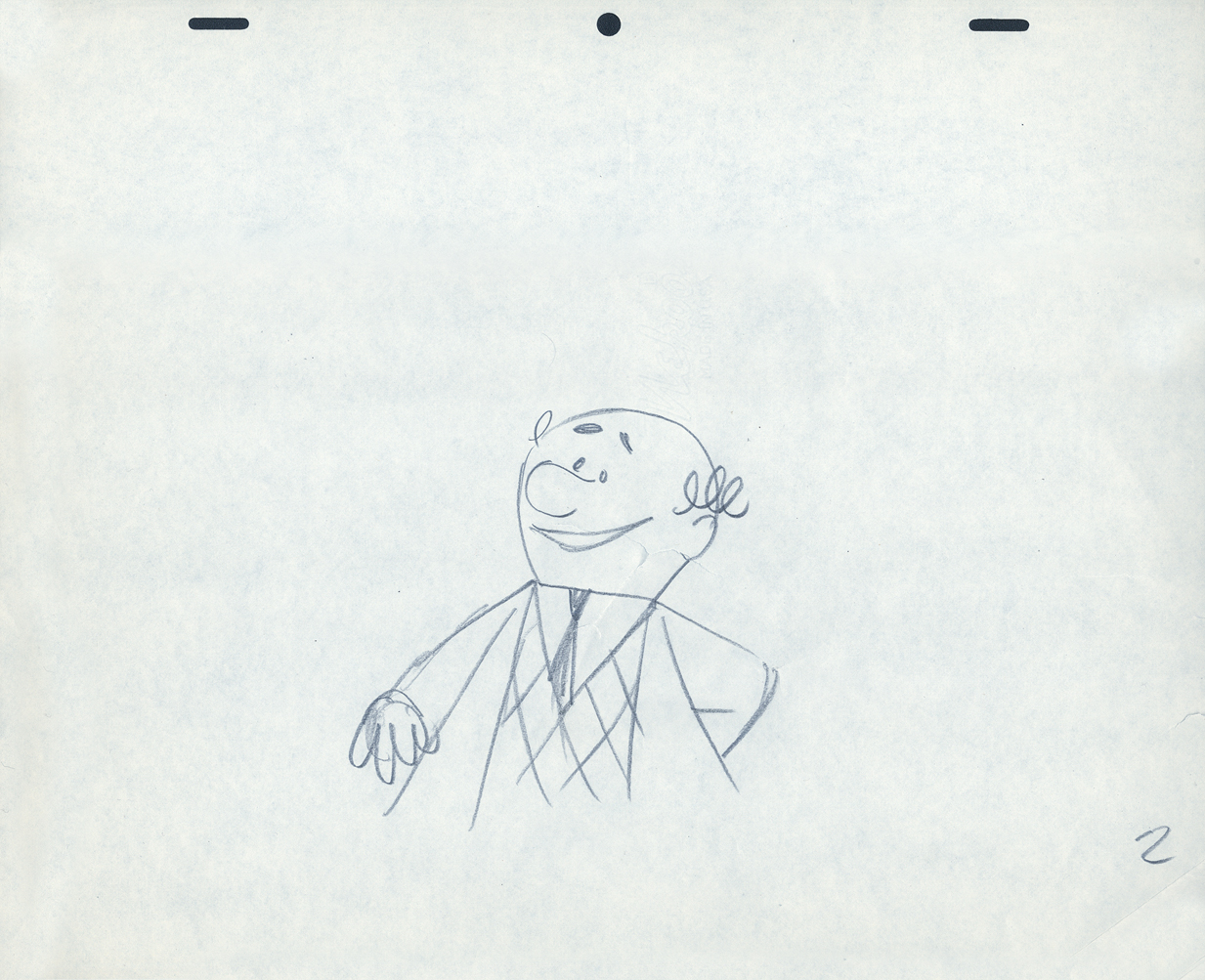
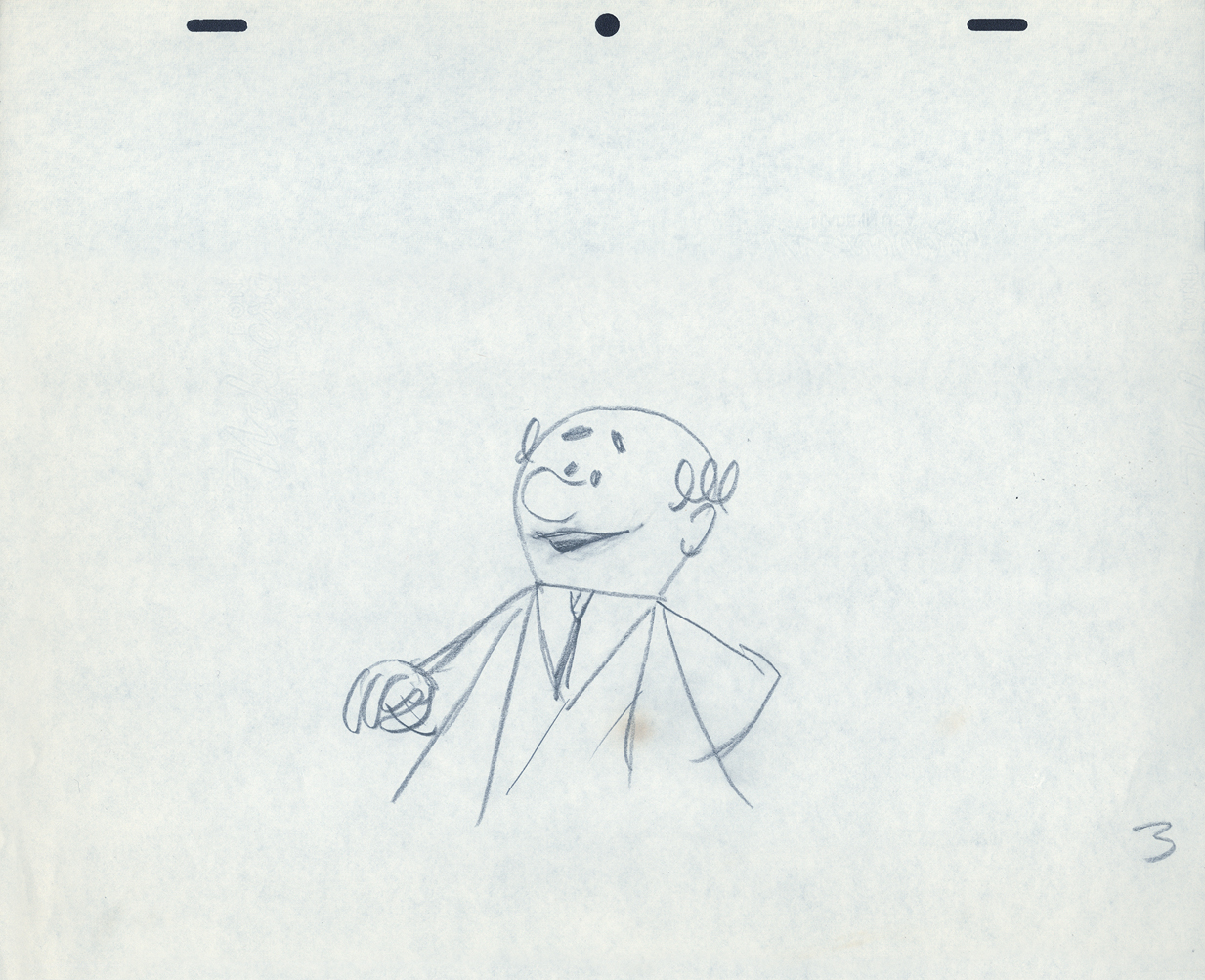
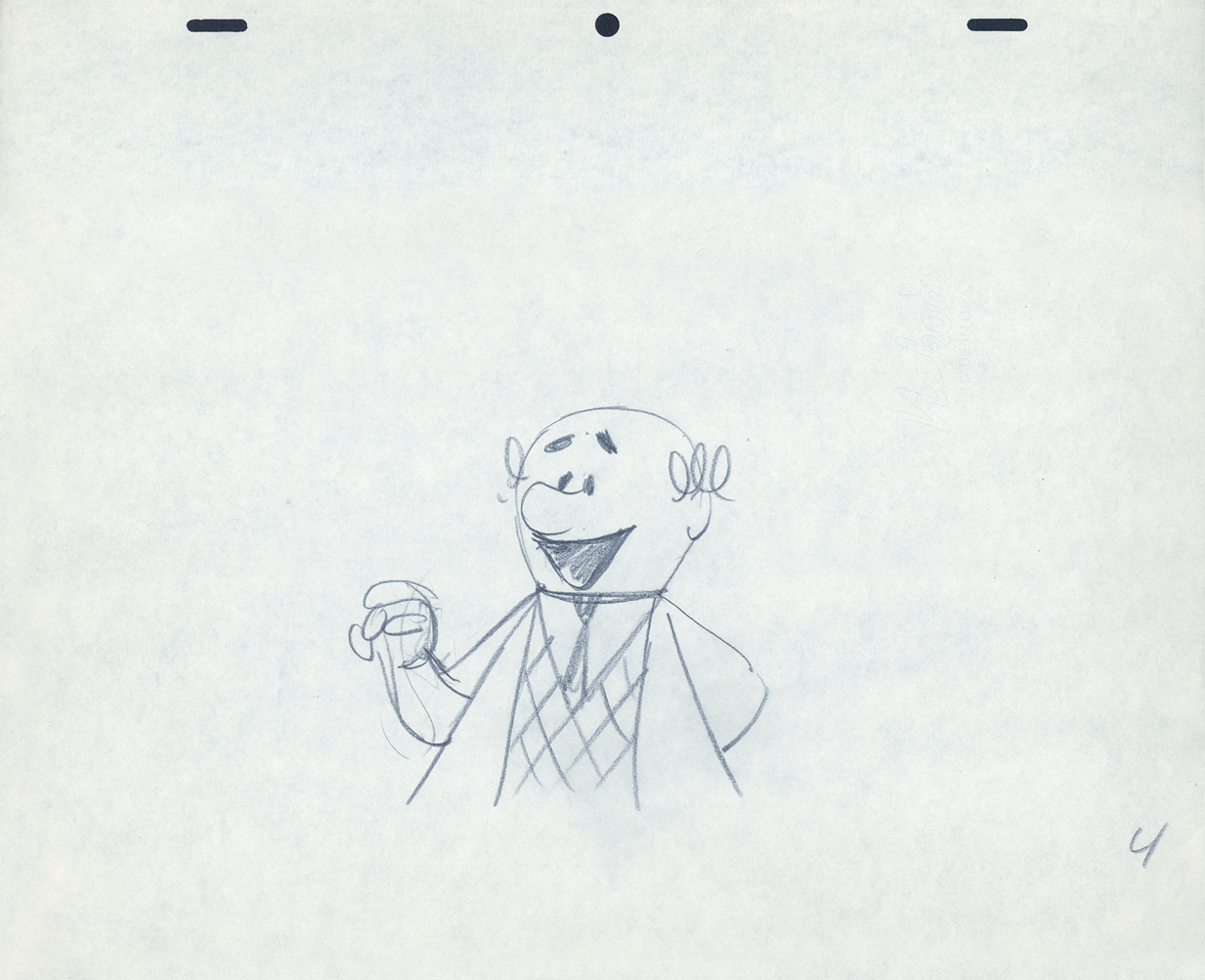
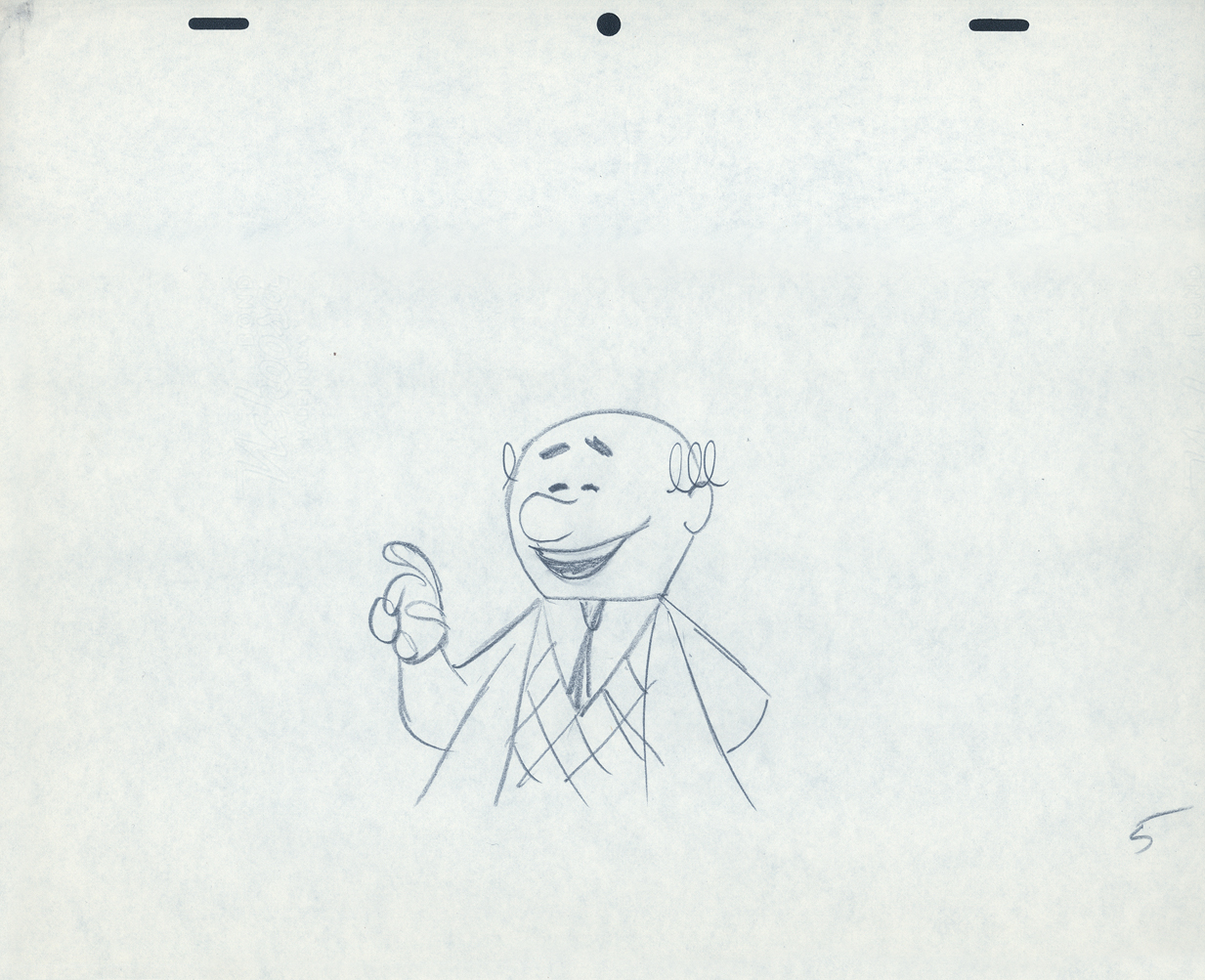
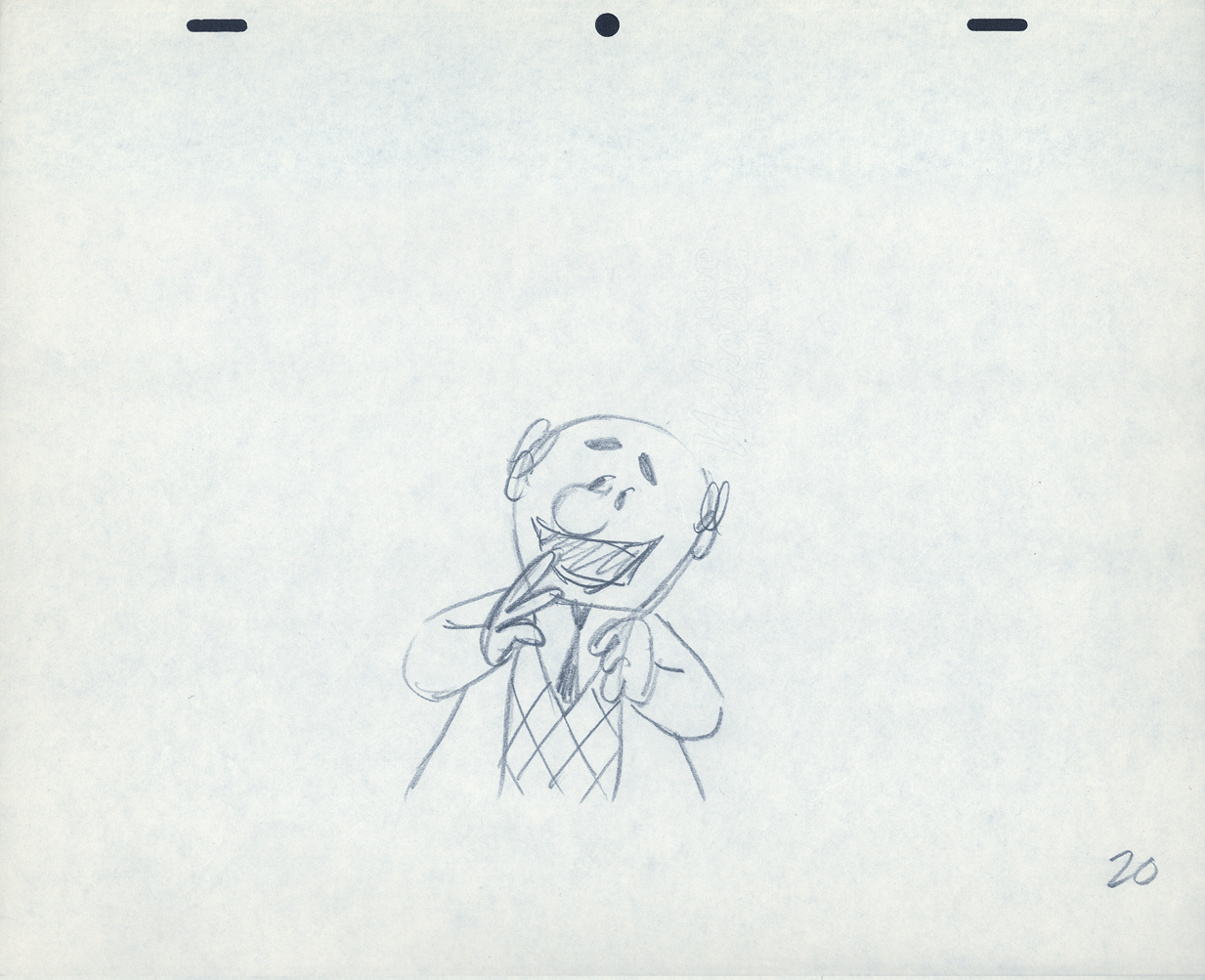
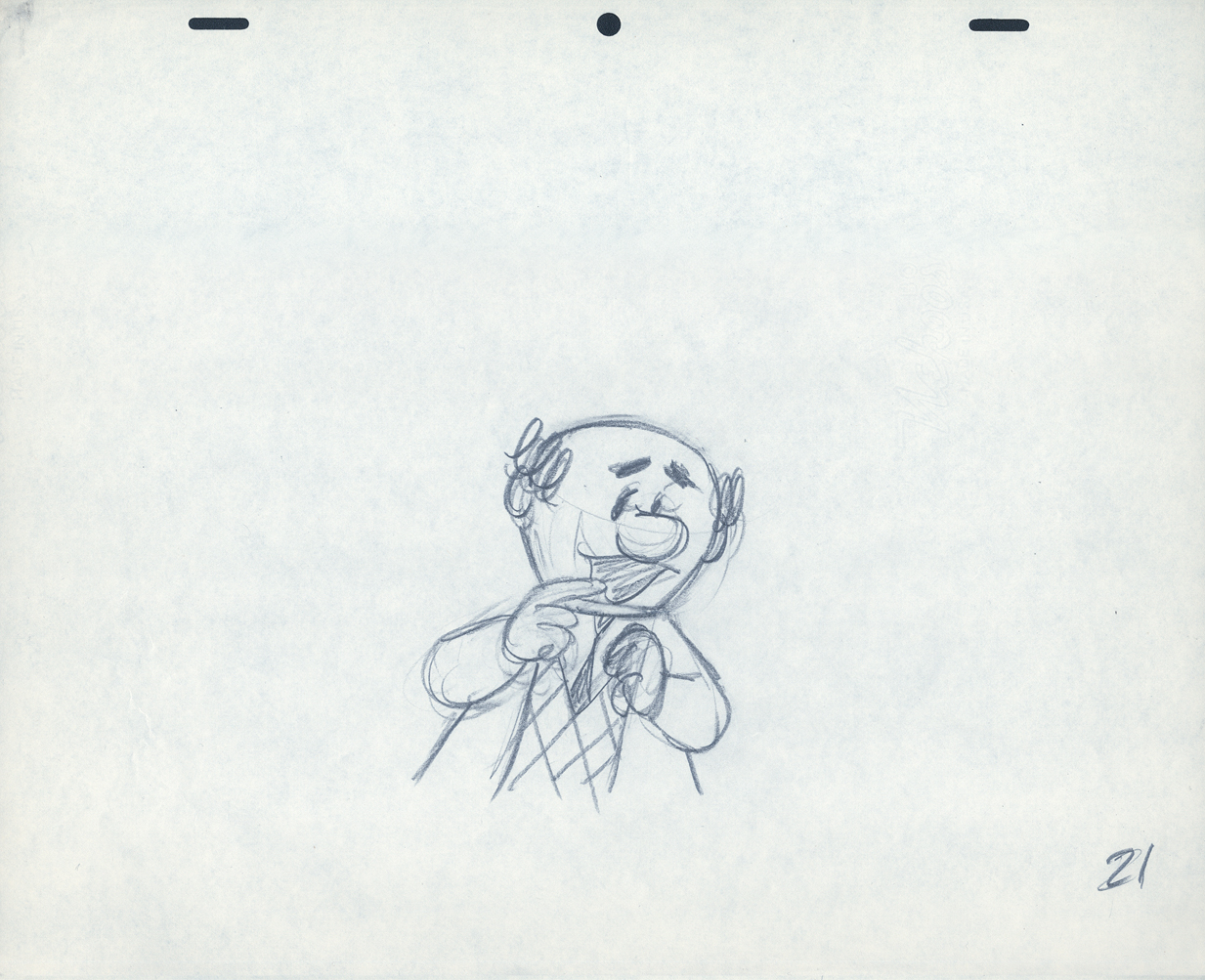
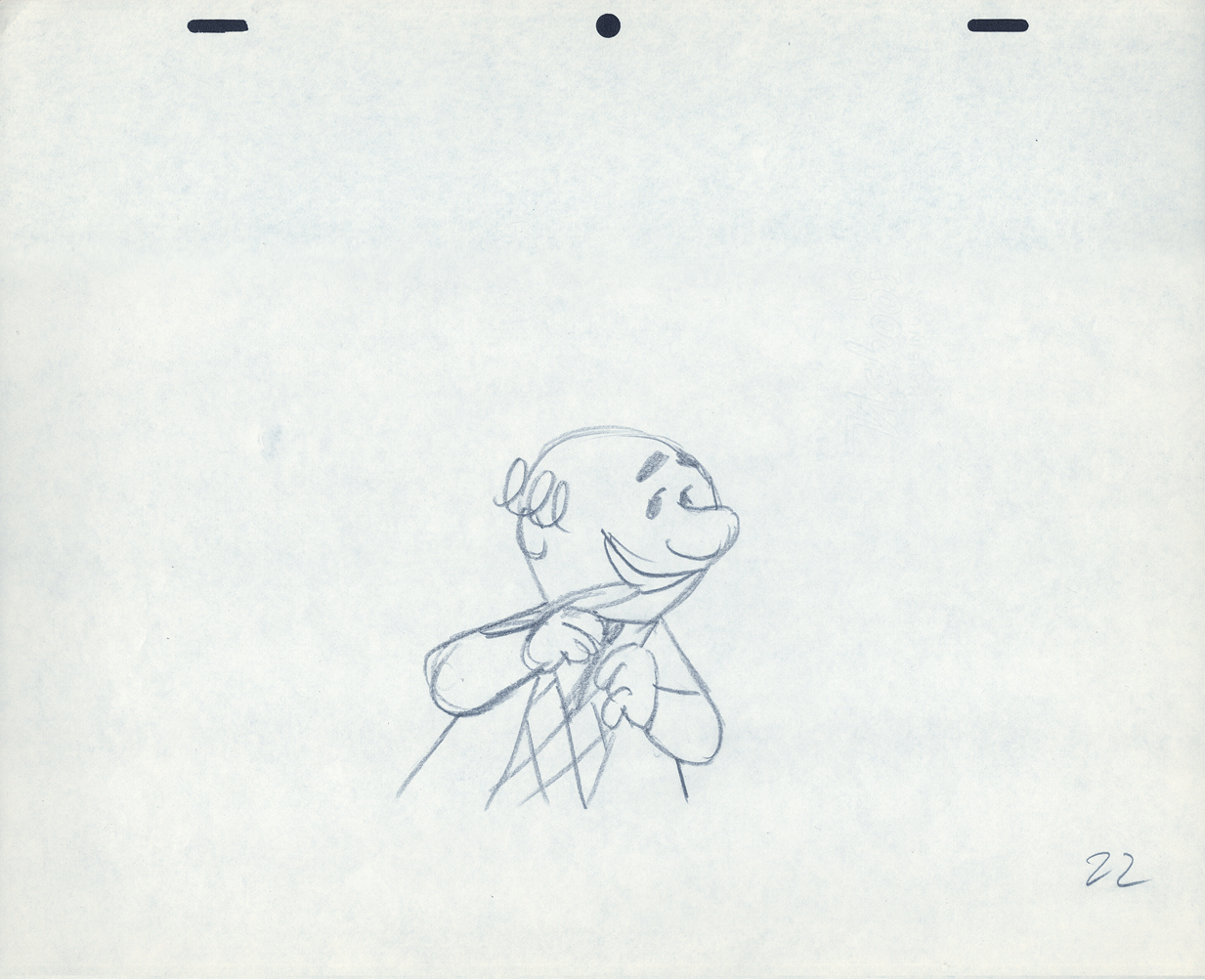
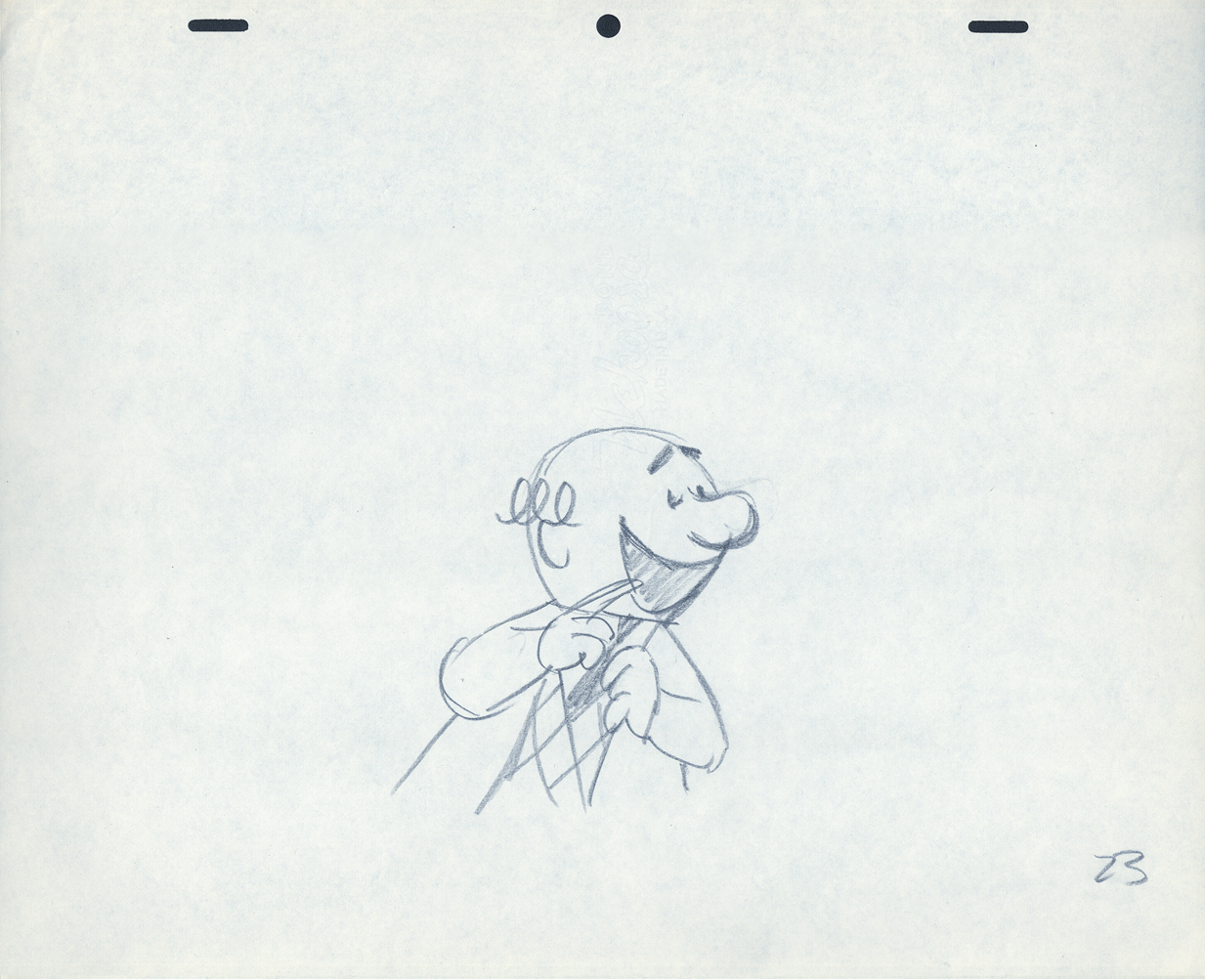
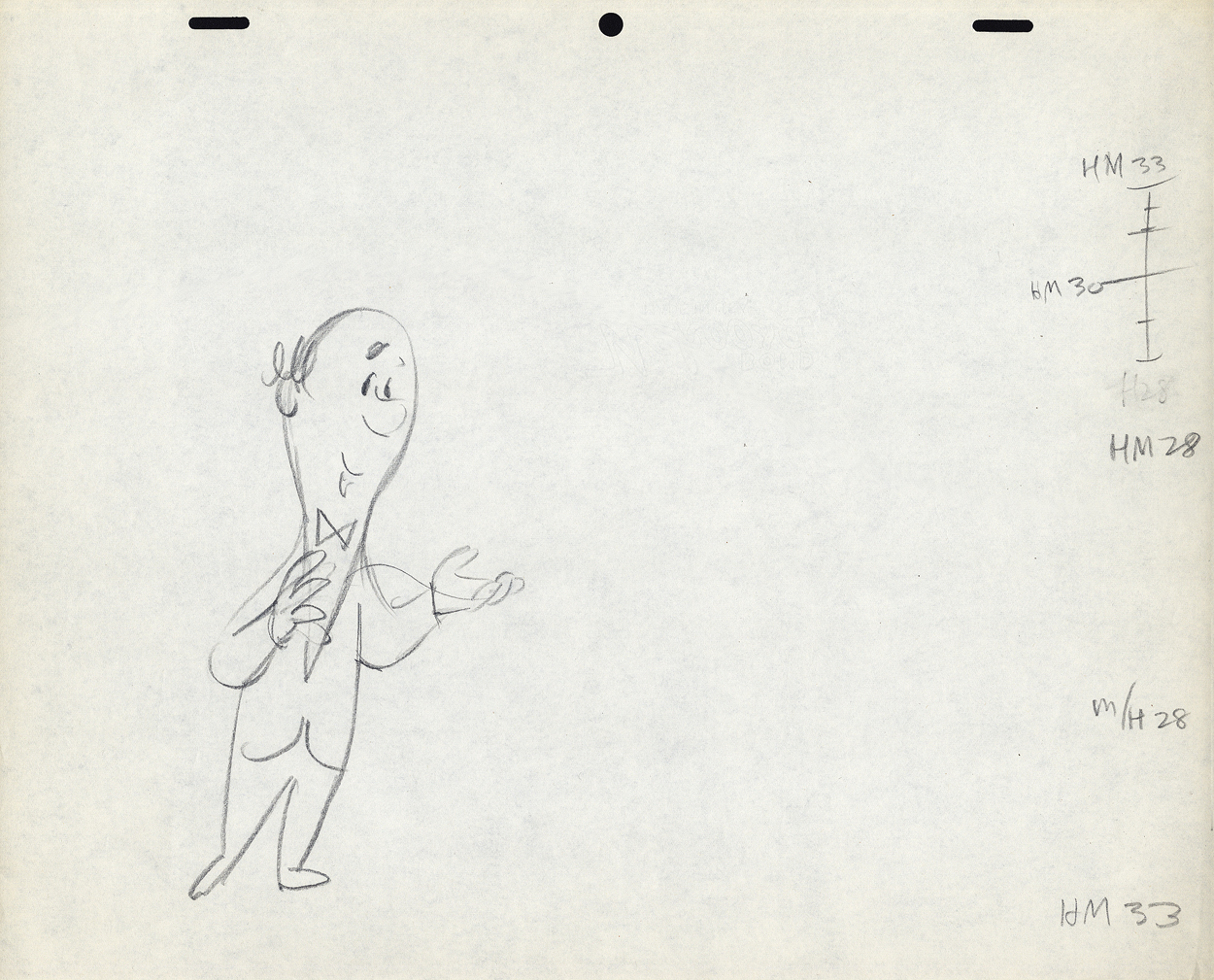
The image of Michael animating is by the great Tissa David. This image is one panel from a storyboard birthday card she drew for him in 1999 celebrating how they met at the Hubley Studio in 1972.
Ray’s memorial and Michael’s rendering of Abel are posted below. If you look closely at Abel’s eyes, you will see Michael.
Heidi
31 March 2014
Ray Kosarin
MICHAEL SPORN MEMORIAL
What Animation Should Be:
On Working with Michael
Michael was an extraordinary artist and his studio was an extraordinary place. And the two or three generations of animation artists, like me, who worked with Michael remain to this day something of an extended family. A great many of us admired Michael, learned from him and were, often importantly, influenced by him. This influence, along with Michael’s remarkable body of work, is a vital part of his legacy.
What makes Michael’s films as distinctive—and as good—as they are comes from who he was: from what mattered to Michael, in art of any kind, and his convictions about what animation was. His studio was something like a repertory company of artists he trusted, and from whom he coaxed the work he wanted. And the way did was rare and exciting.
When you worked for Michael, he invested you in what mattered to him. He shared films and art of all kinds he thought were good; he made clear (at times brutally) what he did not; and he demonstrated by his own example, continually infusing you with his ethos of what animation should be. Figuring out what to do about it was your problem. And you felt determined to get it right.
In this way, Michael’s direction was both firm and, thrillingly, open-minded. He’d hand out full sequences, casting animators according to their sensibilities, and if you wanted to do a particular sequence, he almost always made sure you got it, trusting there was probably a good reason it spoke to you. He seldom gave too-specific directions, preferring to watch where your instincts carried the scene.
This made for a studio atmosphere of personal responsibility and shared purpose. Your work had better be good, but not conspicuous about it. When busy on a production, Michael moved swiftly and spoke little, which sharpened you to the small but critical signals whether you were giving him what he wanted. When OK’ing a line test of a scene you’d just animated, he might enigmatically say, “It moves,†then get on with something else. But when you gave him something he really liked, he’d usually just say, “Great.†At least you were pretty sure that’s what he said. But he said it quickly, while already striding away toward his desk: there was other work to do. When the studio was humming, it felt like a large family, all cooking dinner.
Without a doubt, the quality Michael most prized, both in the work he admired and the work he made, was economy.
Michael is somewhat legendary for the small budgets with which he made most of his films. As his good friend, animation historian Michael Barrier—who’s with us tonight—wrote: “Michael’s genius, and his curse, was that he could do so much with such tiny budgets. I will never cease to wonder what he might have accomplished with the money that always seems to be available to people with only a fraction of his talent and none of his integrity.â€
Yet it would also be a mistake to think that the economy in Michael’s films was strictly about money. In fact, something much more important was going on—something about artistic morality.
Always Michael was drawn to artists who did powerful work with conspicuously minimalist means: painters like Paul Klee, composers like John Adams. Michael often played in the studio minimalist music by Adams, or Philip Glass—music balanced so precisely that, after many bars reiterating the same arpeggio, one note’s climbing a semitone became an epic event. Minimalism was no apology for limited means: it was an expression of artistic purity—a virtuosic display of an artist in peak control of his powers.
So Michael drove you to do much with little. He goaded you by example, dropping valuable hints through his running commentary on his own work. He might, after pencil-testing a scene, triumphantly shout, “Ten drawings!†and then do his pirate laugh.
But through it all was an unmistakable higher purpose. The leaner your animation got, the more focused—a quest for the sweet spot where the interval between one drawing and the next, as with the minimalist composers, became the richest possible event. You were not cheating the audience out of drawings: you were showing them the respect not to squander on them drawings that only smoothed, but did not tell.
It worked wonders. It forced you to work smarter. And, low budgets or not, the films stubbornly won Emmys, ACE Awards, festival prizes, endless critical praise.
All of us who were lucky to work with Michael have of course had our own experiences. And yet our shared experience working with him, as we always remember when our paths cross today, importantly shaped and strengthened us all—as artists and individuals. The vocabulary Michael shared with us for how to know and make good work, to this day, coaxes us to do better, even on projects Michael might not have deemed worthy. Michael’s habit of dogged perseverance reminds us of our own reserve. And stubbornly alive in all of us are Michael’s sharp eye and infallible taste. This is Michael’s living—and loyal— legacy.
Being the luckiest of people, I had a spill down an escalator and met a wall with 10 steel grids on it. Tried to reshape my face and of course, it hasn’t, unfortunately. But don’t worry. I’ll be back soon, writing.
I’ve got some things planned and it could be as soon as tomorrow that I pass them along.
I’ve had some weird stuff going on in my life and I’m just trying to get past it.
Yesterday’s blog post was something I needed to write for myself.
Animation, as far as I can see hasn’t been going as well as I’d like. The good films have been few and far between.
During my career, I’ve been asked to be involved in a number of fine films. However, it’s the luck of the draw to be involved in good movies, also the power of your own abilities. I can’t tell you how many films, bad films, that have requested my help and participation. Also good films. They’ve been few and farther between, but they’ve been there.
The moment Weston Woods asked me to work on The Man Who Walked Between the Towers I knew this was a good one. It took me about five seconds to read the script and know it was great, and I knew I was working on a winner. There are other films that had the opposite reaction for me, and I was correct there as well.
Yesterday I wrote about a film I was asked to participate in. I knew the very second I saw the project that it would make a great film. None of the story stuff I wrote about – 60,000 flyer pilots (just a metaphor) coming to the rescue – was actually in the film. But the result is the same. The film is a feel good moment, and I know it will make a very good film. Even, god help me, if I’m not allowed to be part of it. It’s a good movie with a good story line. I just hope I am part of it, because I like it enormously.
-
My point, here, is this. Please allow me the use of Miyazaki for my example. The man is a good = no, take that back, a great filmmaker. He not only knows a good film, but he knows how to make them better. The films ha makes become automatically better. He has something to say; he finds curious and complicated ways of telling those stories, and when he is part of a project he gets the most of the story.
He knew he had to make it a children’s film with the simplest of story directions. He had to reach the largest possible audience and be direct. He was, and the film he made was an unmitigated success.
With The Wind Rises he has made an adult film it’s the only way he could tell this tale. He also complicates the structure of the story, and despite the fact that he will not get the largest possible audience, he wants to be sure every aspect of the complicated story is told. This he does. He ignores a large section of the audience for the sake of making a richer story.
His work on the two films, in my mind, can only be seen as the work of a genius. His story is as full as it can ever become, yet he disappoints a small part of the audience searching for the obvious. I can only credit the man, the artist. I also take away very deep lessons about his artistry and what he wanted to do with it. I’ve seen Ponyo half a dozen times with full joy. With The Wind Rises, occurring post Tsunami and post nuclear meltdown, I am sure he has plenty to tell me, and I will see it again and again until I’ve gotten all of its pleasure.
Most prominently I believe he wants to be heard about man’s inhumanity to man. Despite all the natural disaster and chaos in our lives, he uses a man intent on carrying out the best war to get the full tale told. His method is enough to make me tear up, his story goes even deeper.
-
So back to that film that I praised last night. The one that asked me participate in telling a sad and deep story. I am beside myself with joy at having been asked. I hope I remain connected with it. I am honored at having been asked. If I am allowed to continue with it, I will do my very best. If I am not allowed to continue through to the end,I’ll watch and have my opinion, and that’s one opinion I’ll keep to myself.
________________________________
It’s been a few days since I posted some artwork. Here are some piece I repost which were taken from the collection of Vincent Cafarelli. I’m curently sitting in his desk at Buzzco, so I’d like to see more of the great art that passd his way during the heyday of the commercial in NYC.
Among Vince Cafarelli‘s remaining artifacts there are lots of bits and pieces from several Piels Bros. commercial spots. I decided to put some of it together – even though they’re not really connected – into this one post.
There are animation drawings I’ll try to post in other pieces.
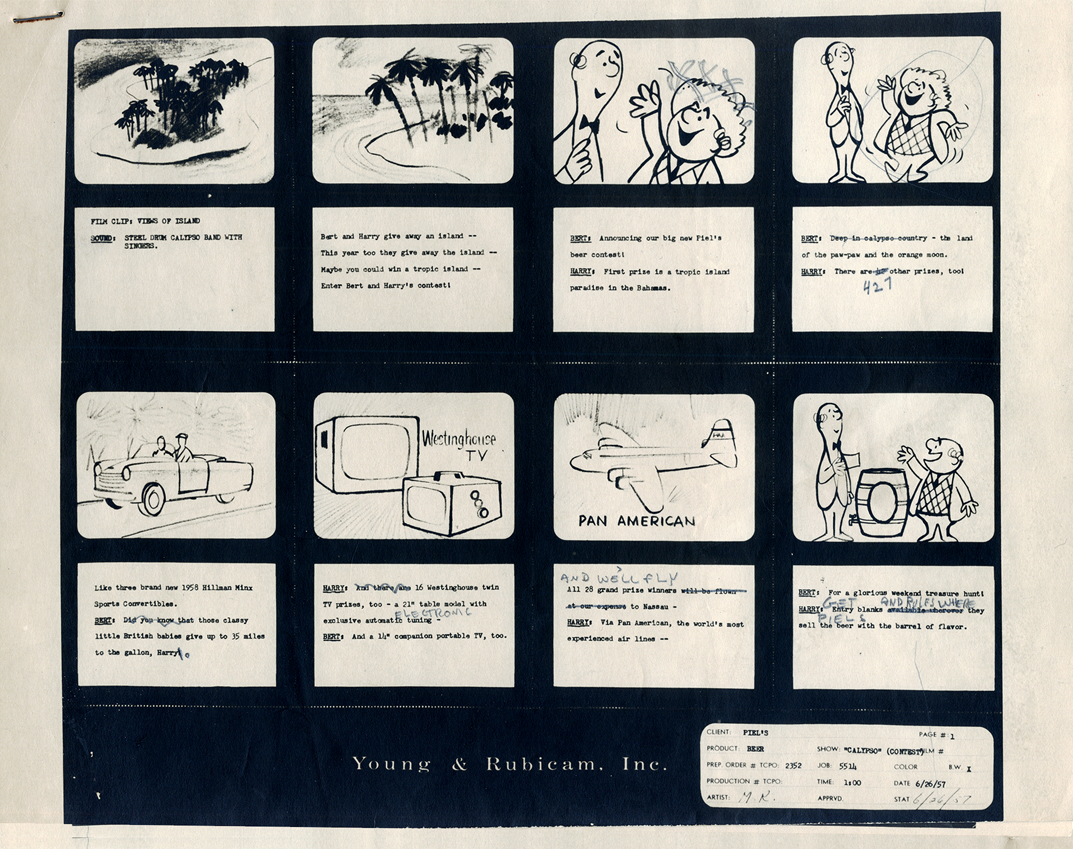
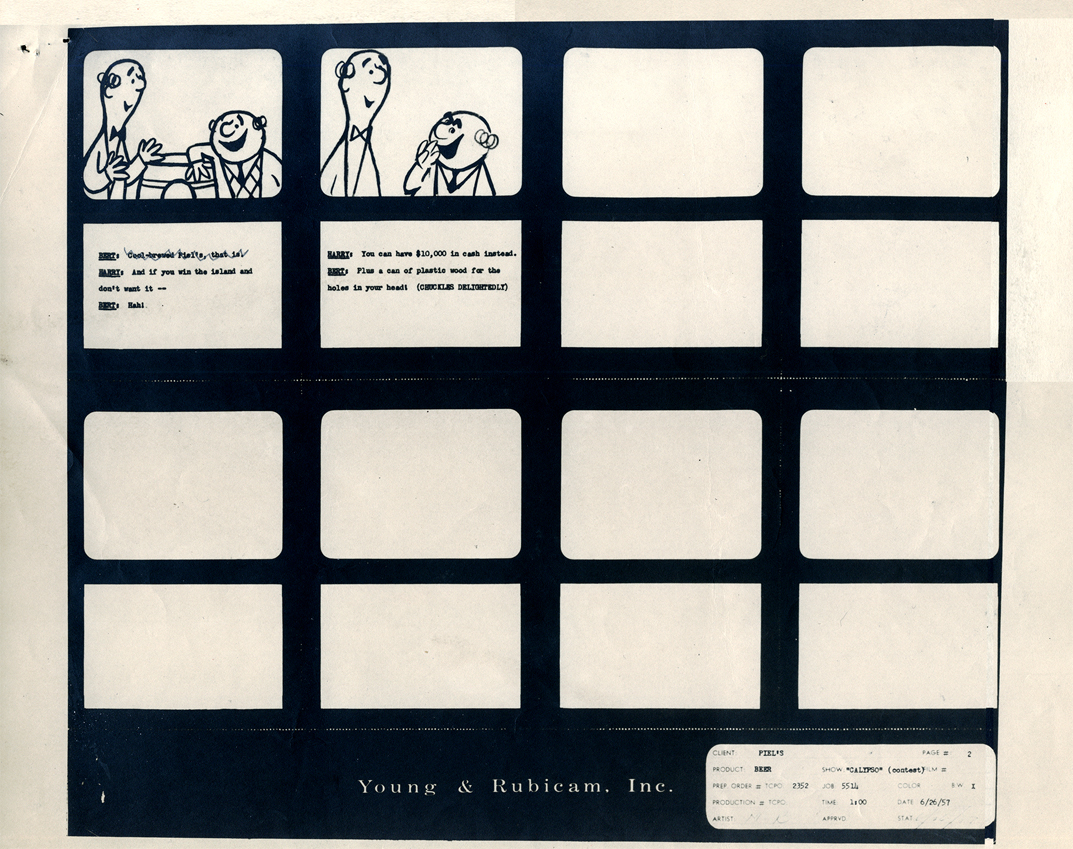
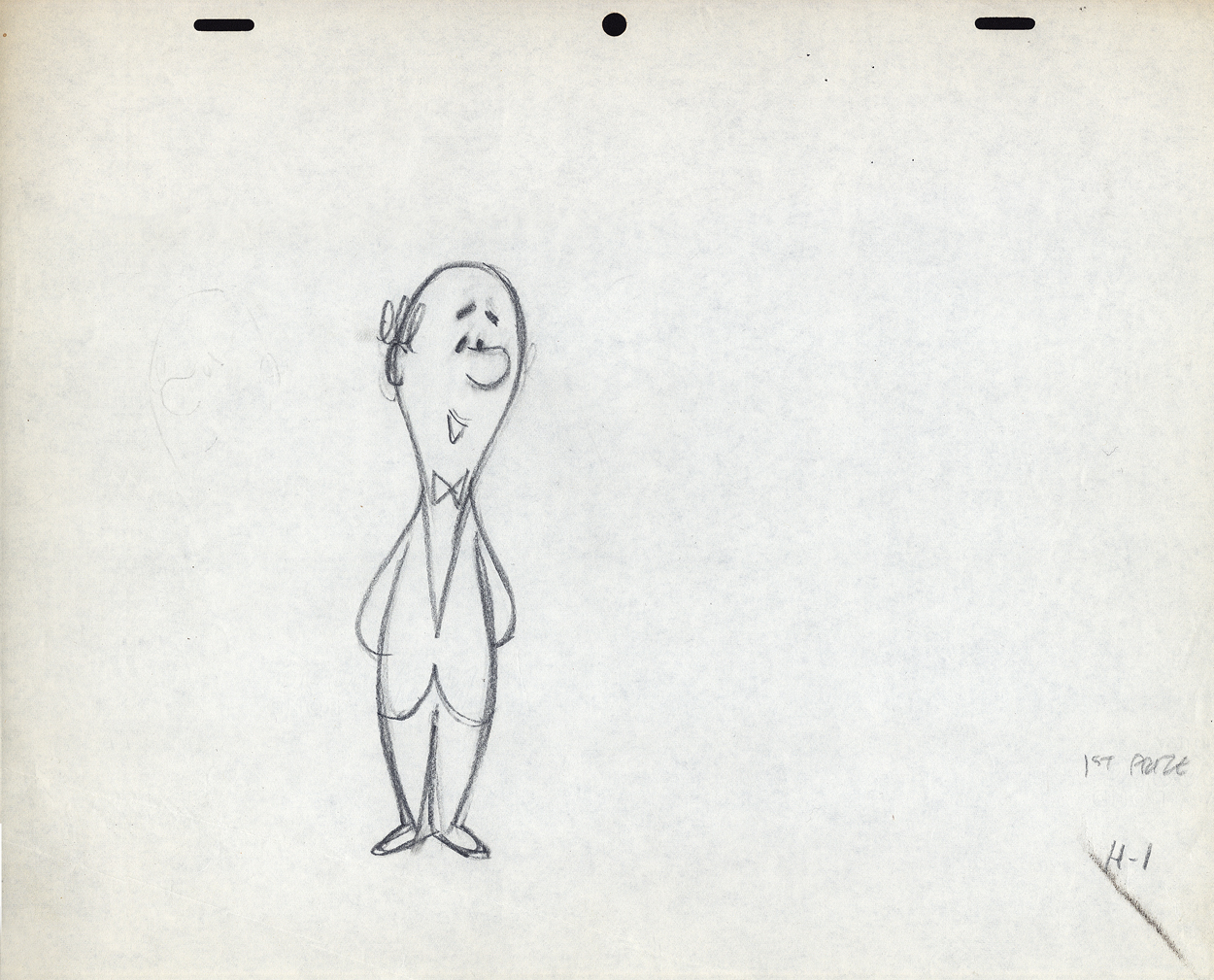
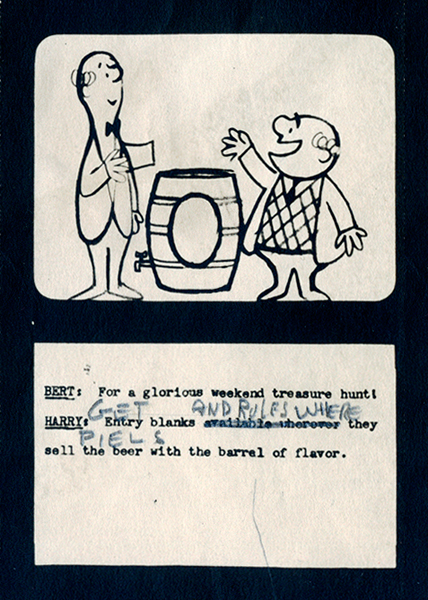
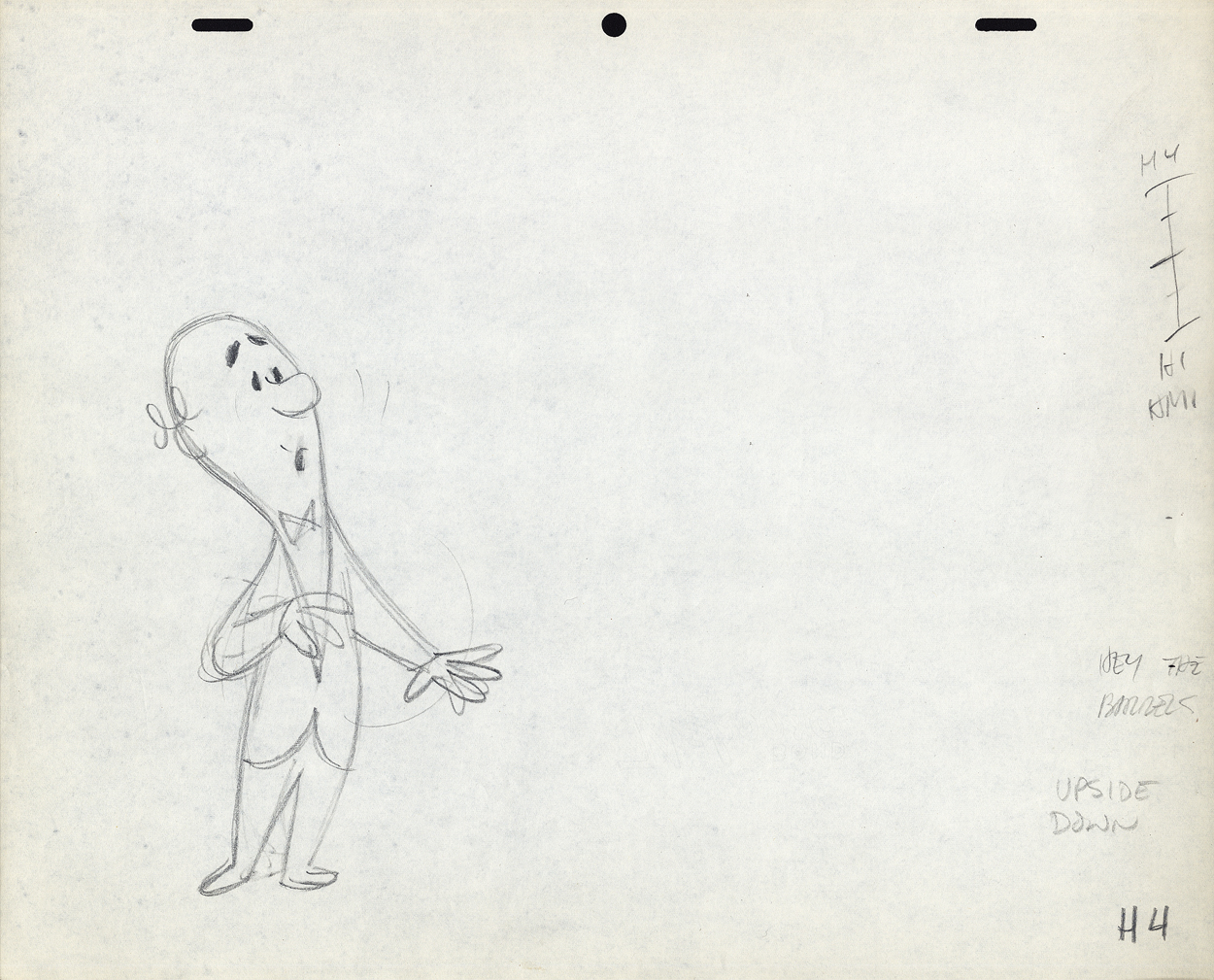
Here, we have a storyboard for a spot; I believe this is an abbreviated spot promoting some contest Piels beer was running. I think this is from a shortened version of a one minute spot since there are animation drawings which are obviously from the same setup, but they’re not part of this storyboard. (There’s an unveiling of the barrel, which is upside down.)
Since the boards are dated 1957, and given the use of signal corps pegs, I believe these were done for UPA.
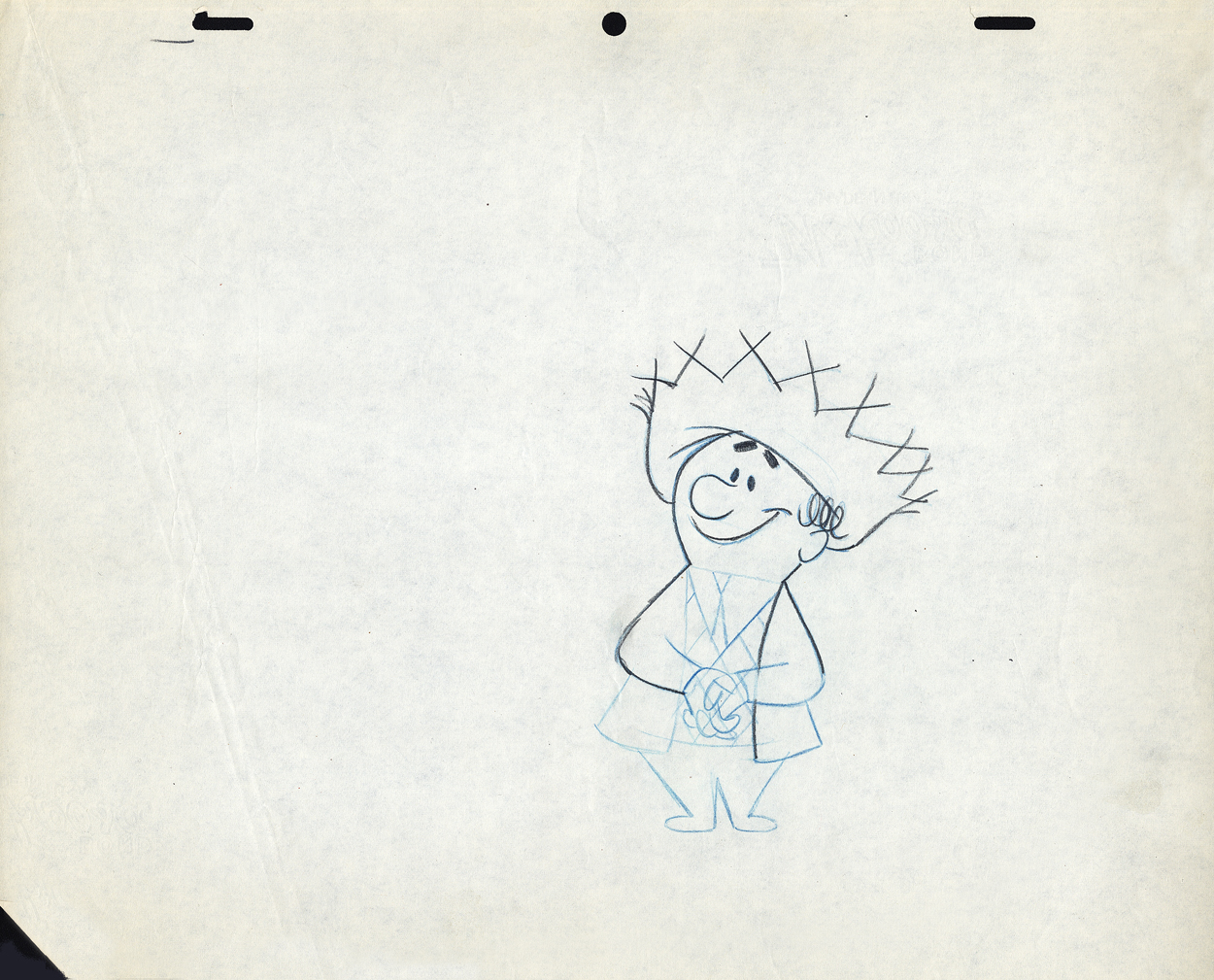
Regardless, the drawings are excellent. I presume they’re hand outs to Lu Guarnier, animating, and Vince Cafarelli, assisting.
1
2
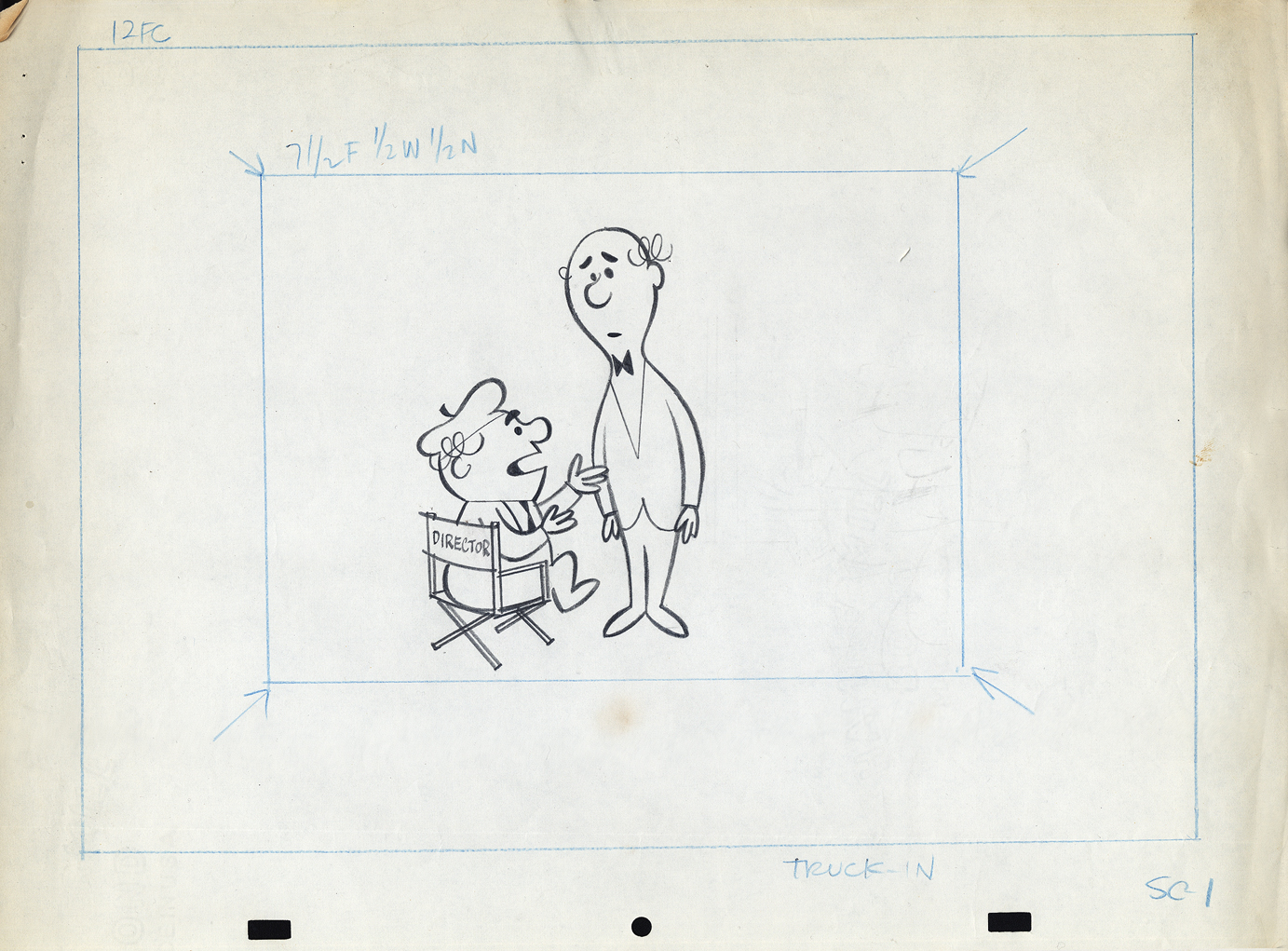
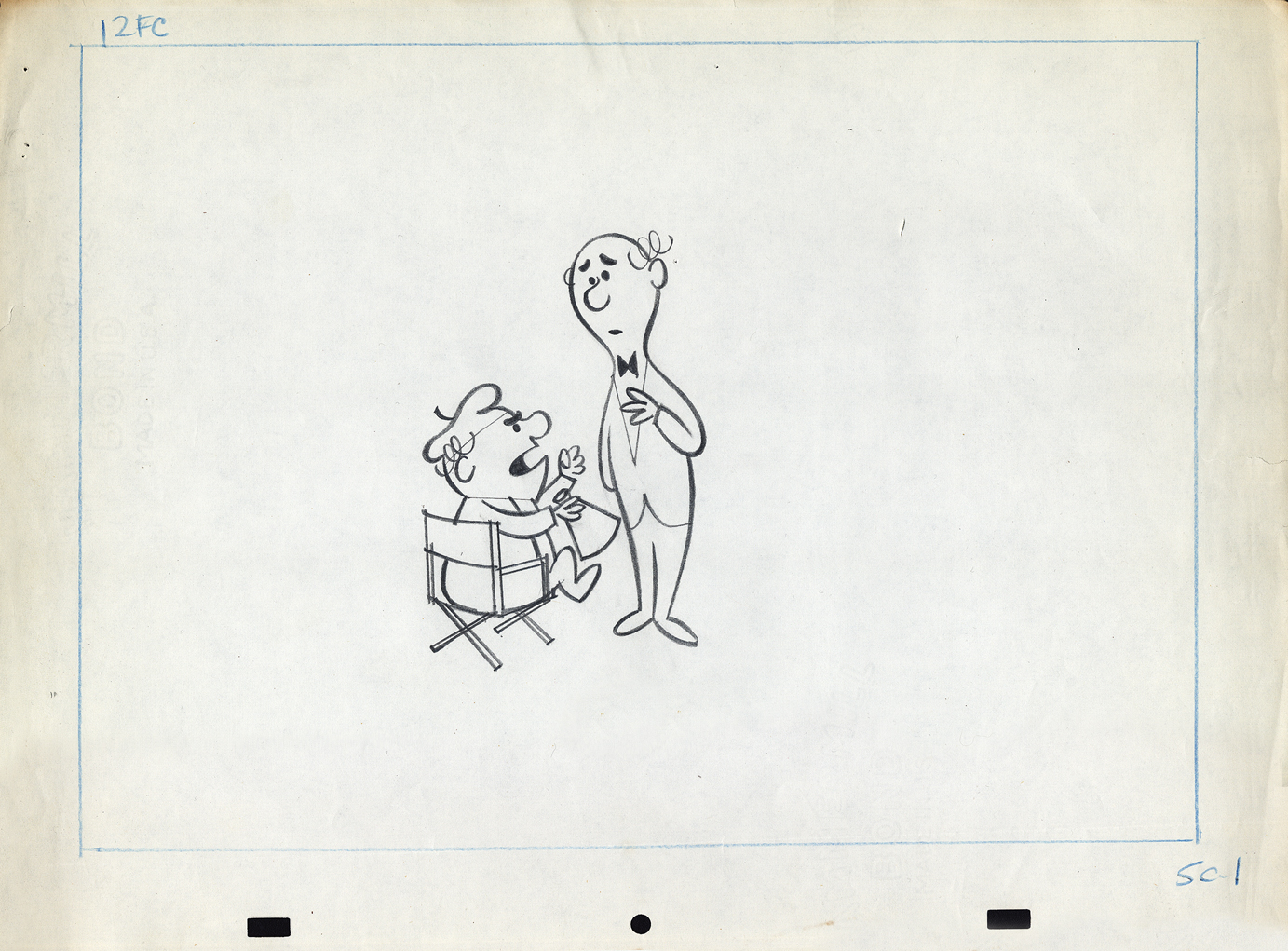
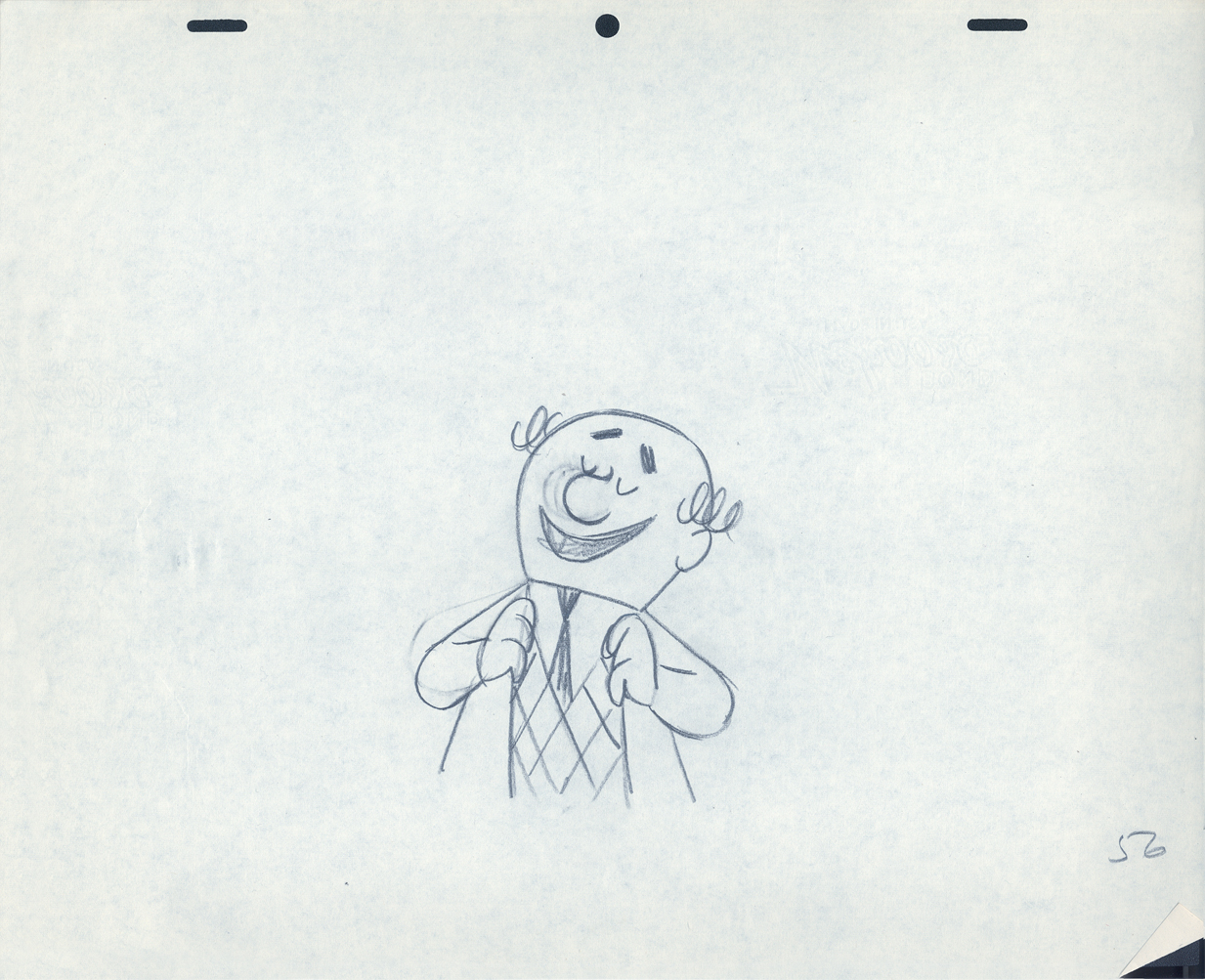
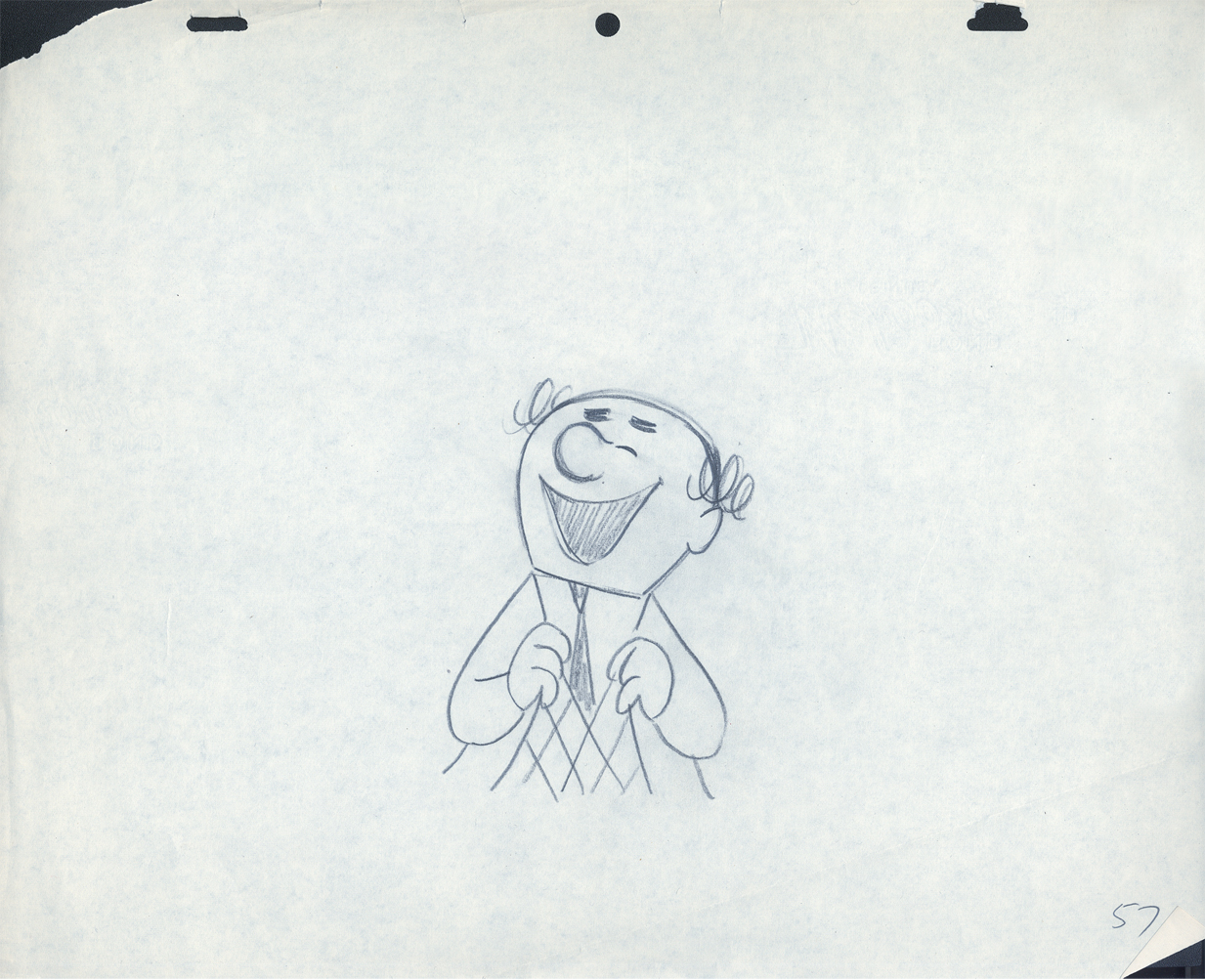
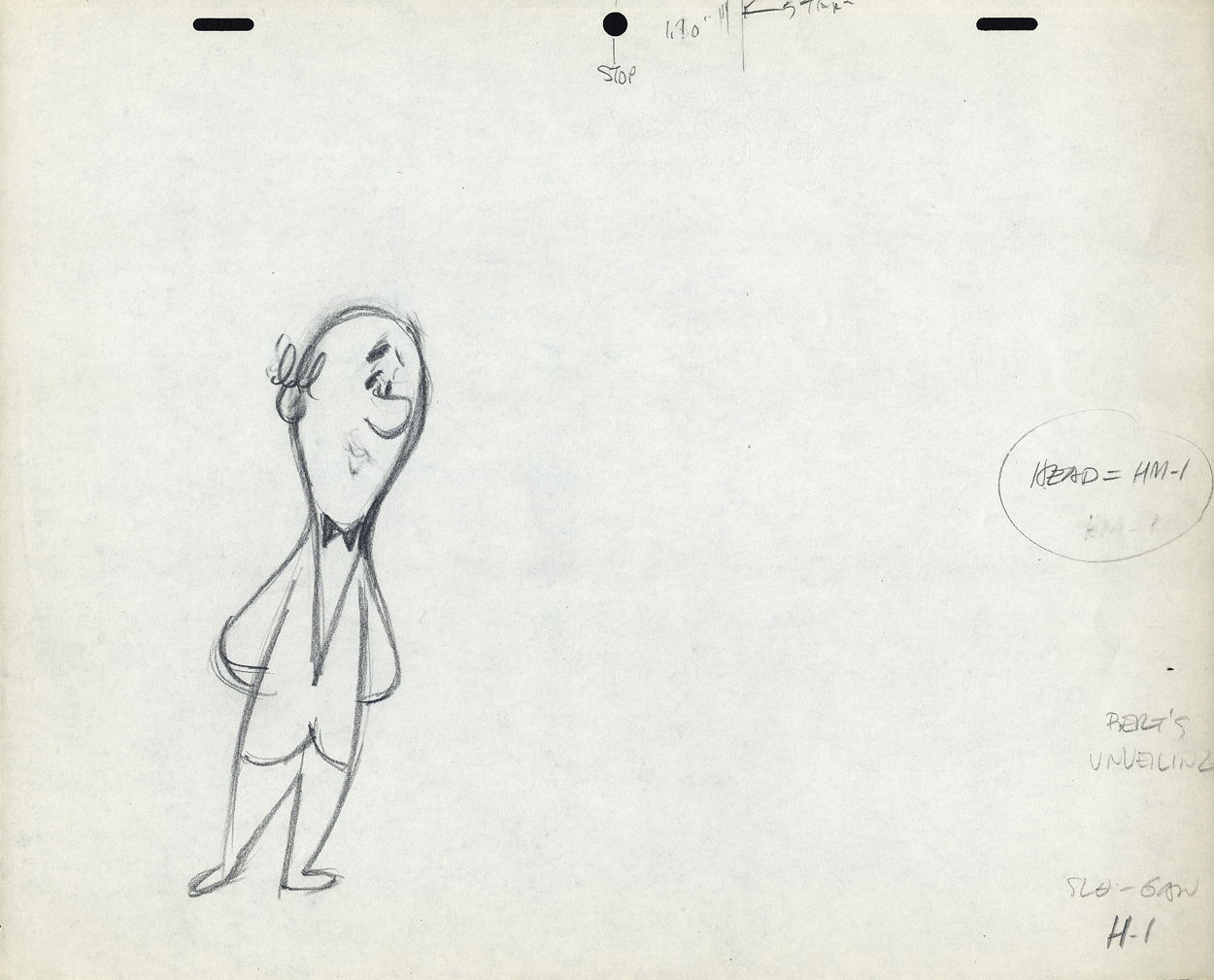
The following are three drawings from the opening scene of this storyboard. Others from this scene weren’t saved.
1
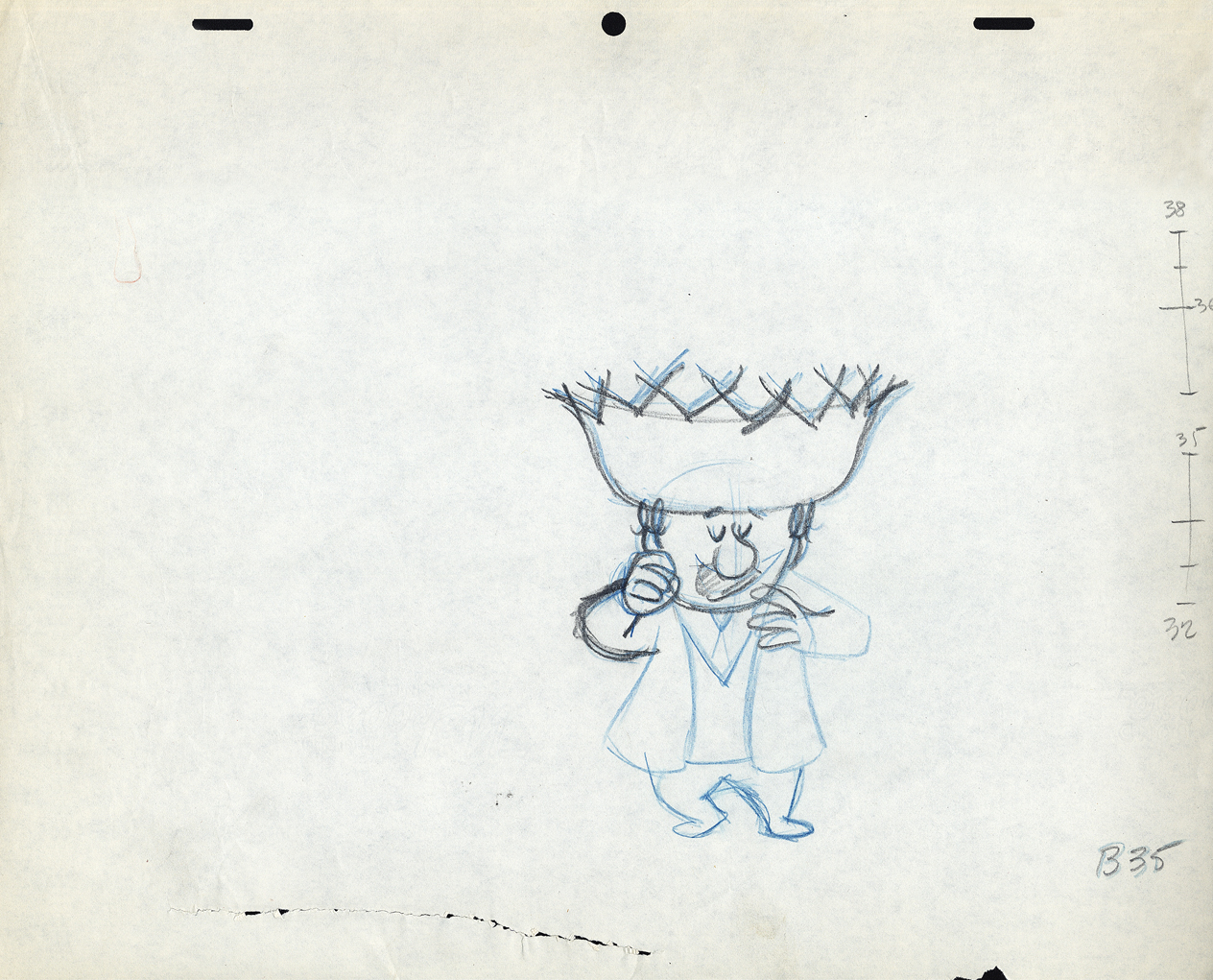
Here’s Bert.
2
3
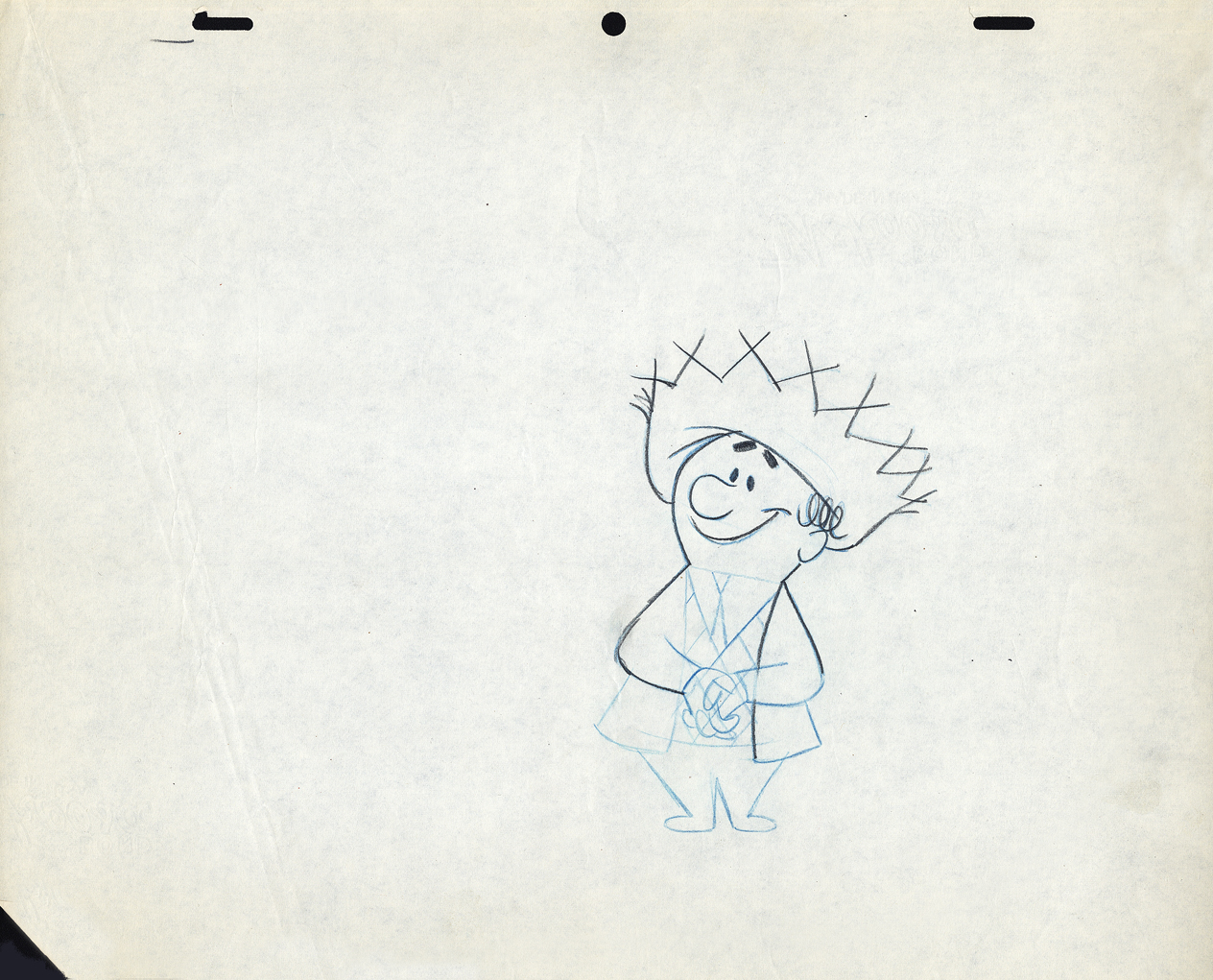
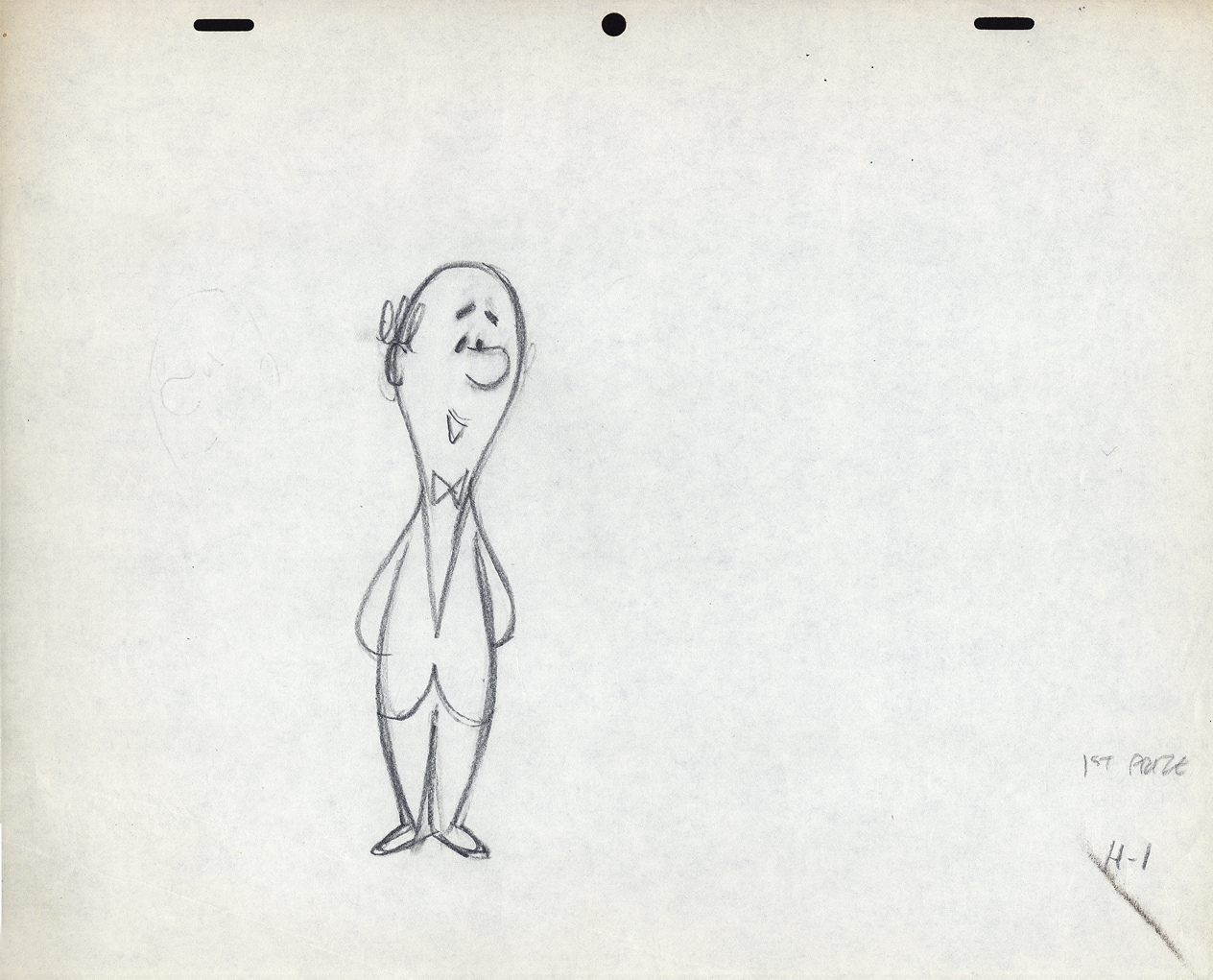
And here’s a single drawing of Harry from the scene.
Let’s follow that with layout drawings from two different spots. The first doesn’t really offer much, but the quality of the clean-ups and the drawing is first rate. I’m pleased to post it:
1a
1b
2
6
Here are layout drawings for the second of the two spots I have in hand. I presume this is also a spot promoting that contest.
1
3
4
7
8
9
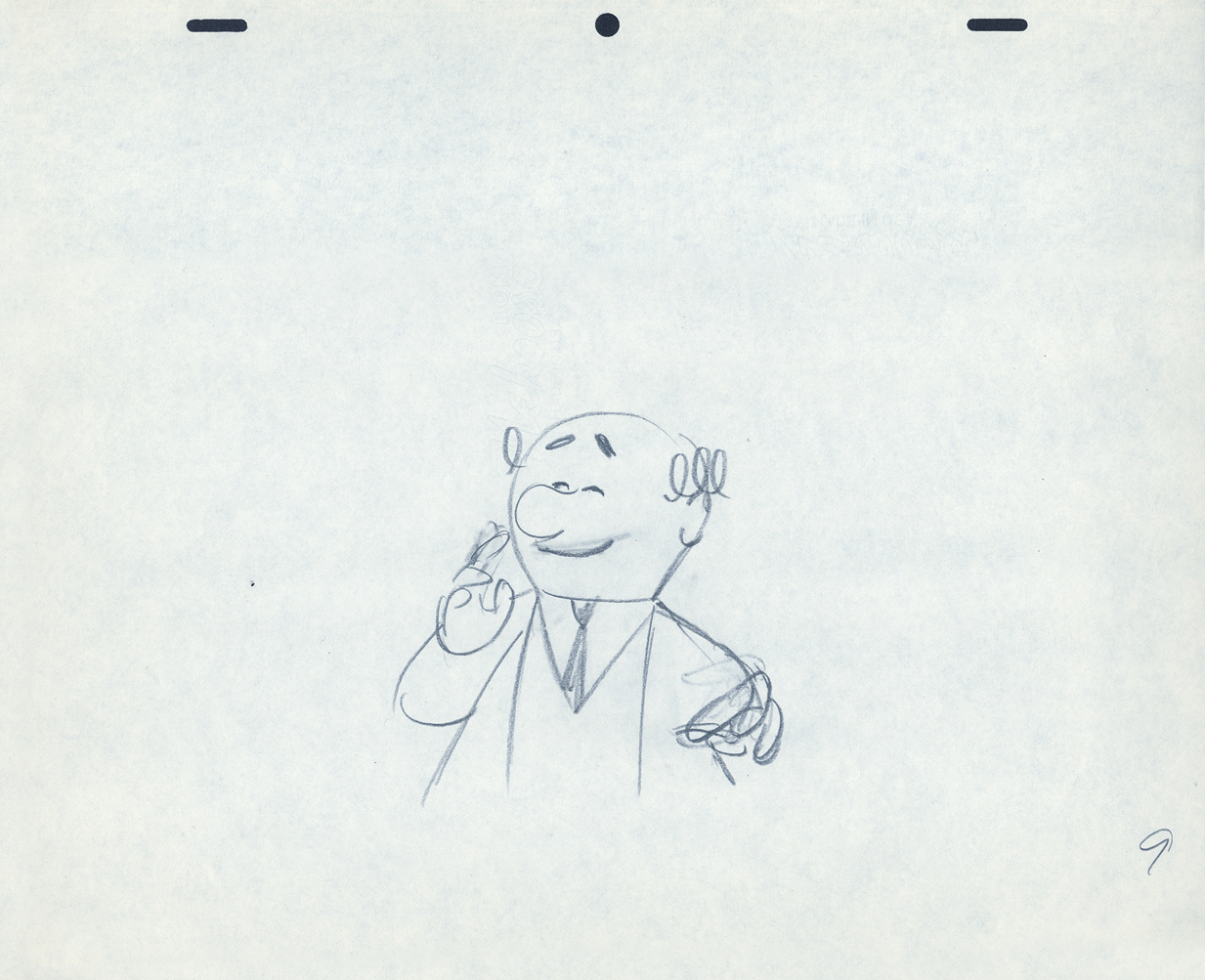
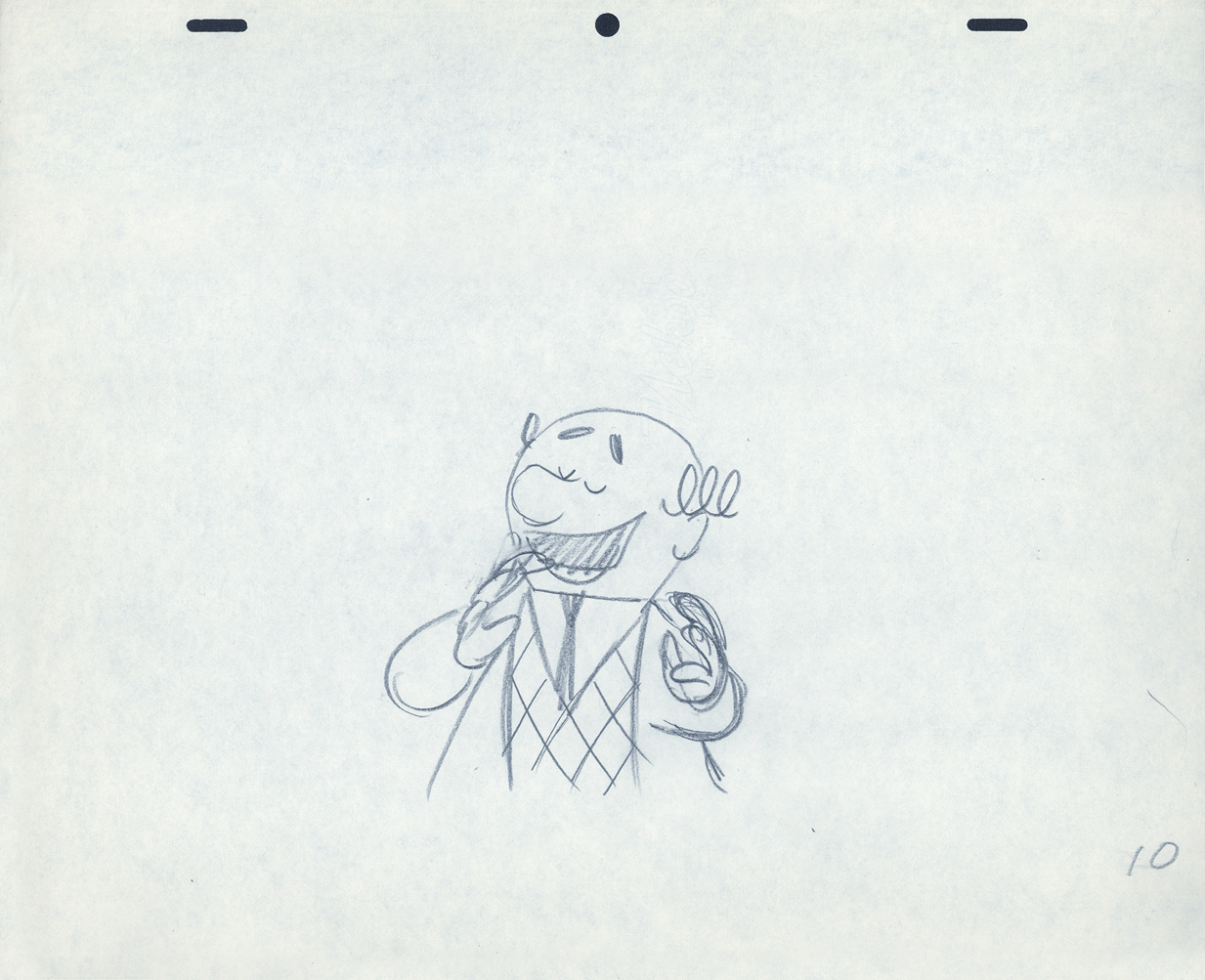
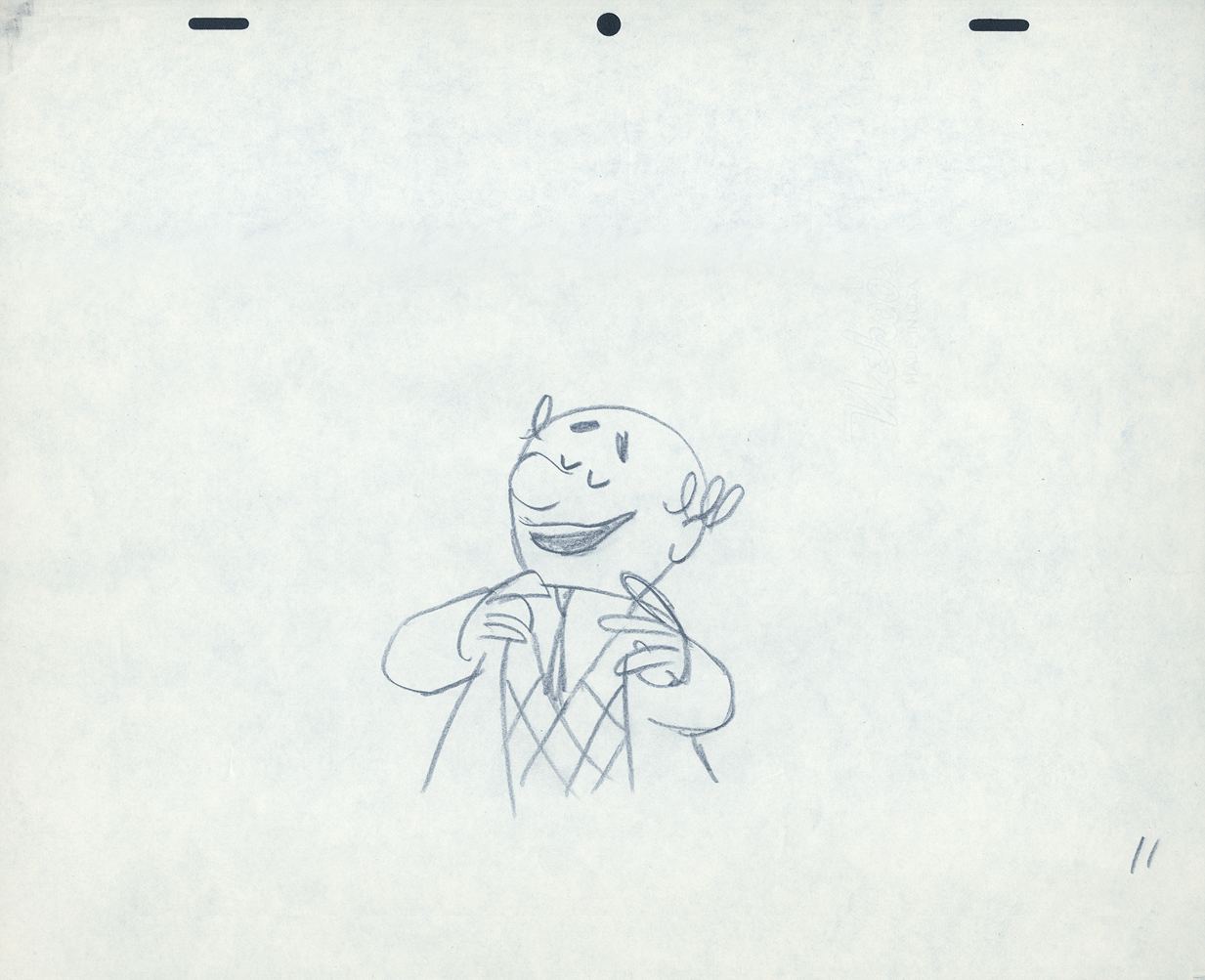
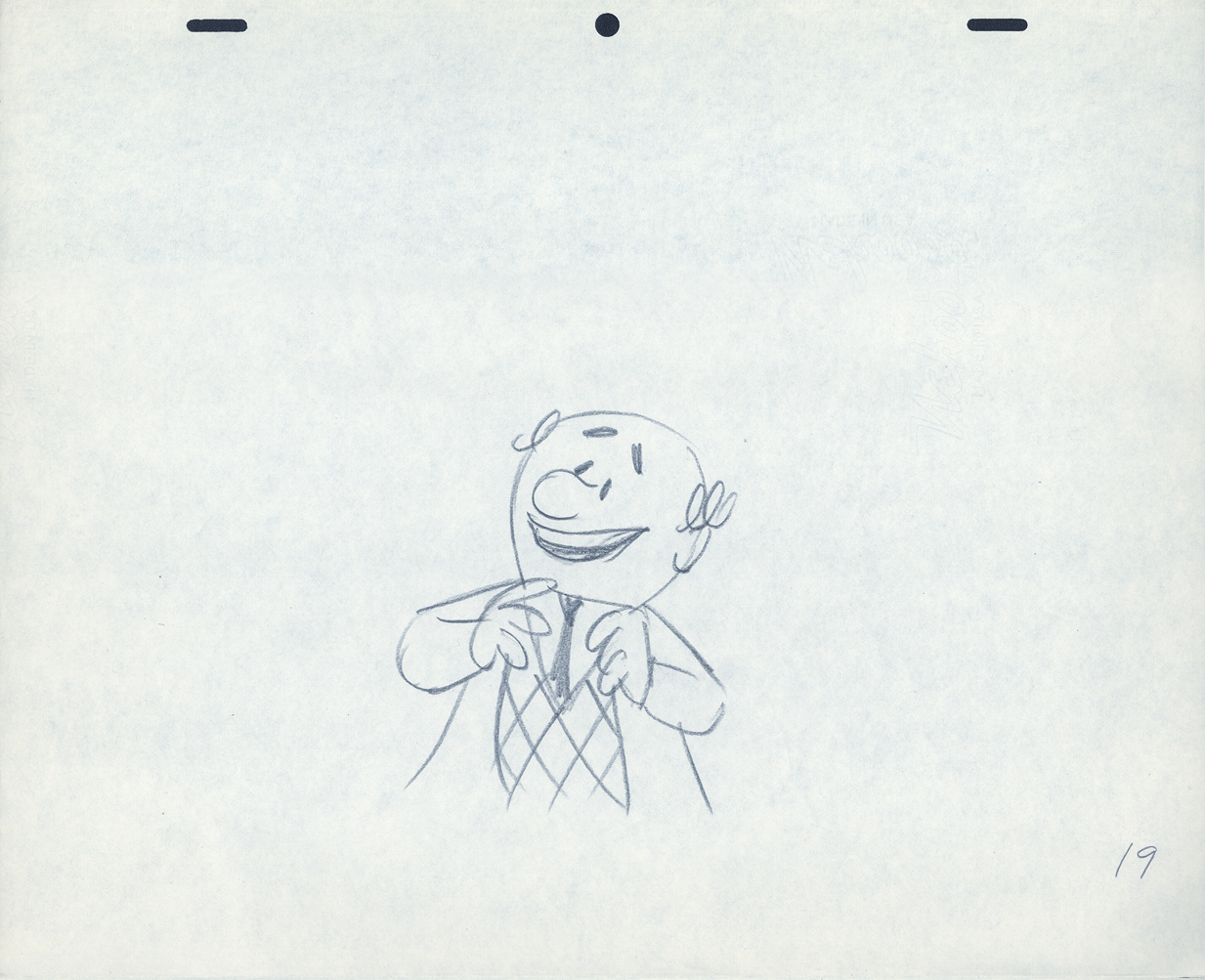
- Here’s one of the scenes saved by Vince Cafarelli from a commercial he did while at Goulding-Elliott-Graham. The commercial was animated by Lu Guarnier, and Vinny was the assistant on it. Hence, he saved the rough drawings (instead of Bert Piels. (Sorry I don’t know what he’s saying, though I’m looking for the storyboard.)
So, here are Lu’s rough drawings in this CU
2
3 4
5
9
10 11
19
20 21
22 23
25
26
34
35 36
37
38
45
46 47
48 49
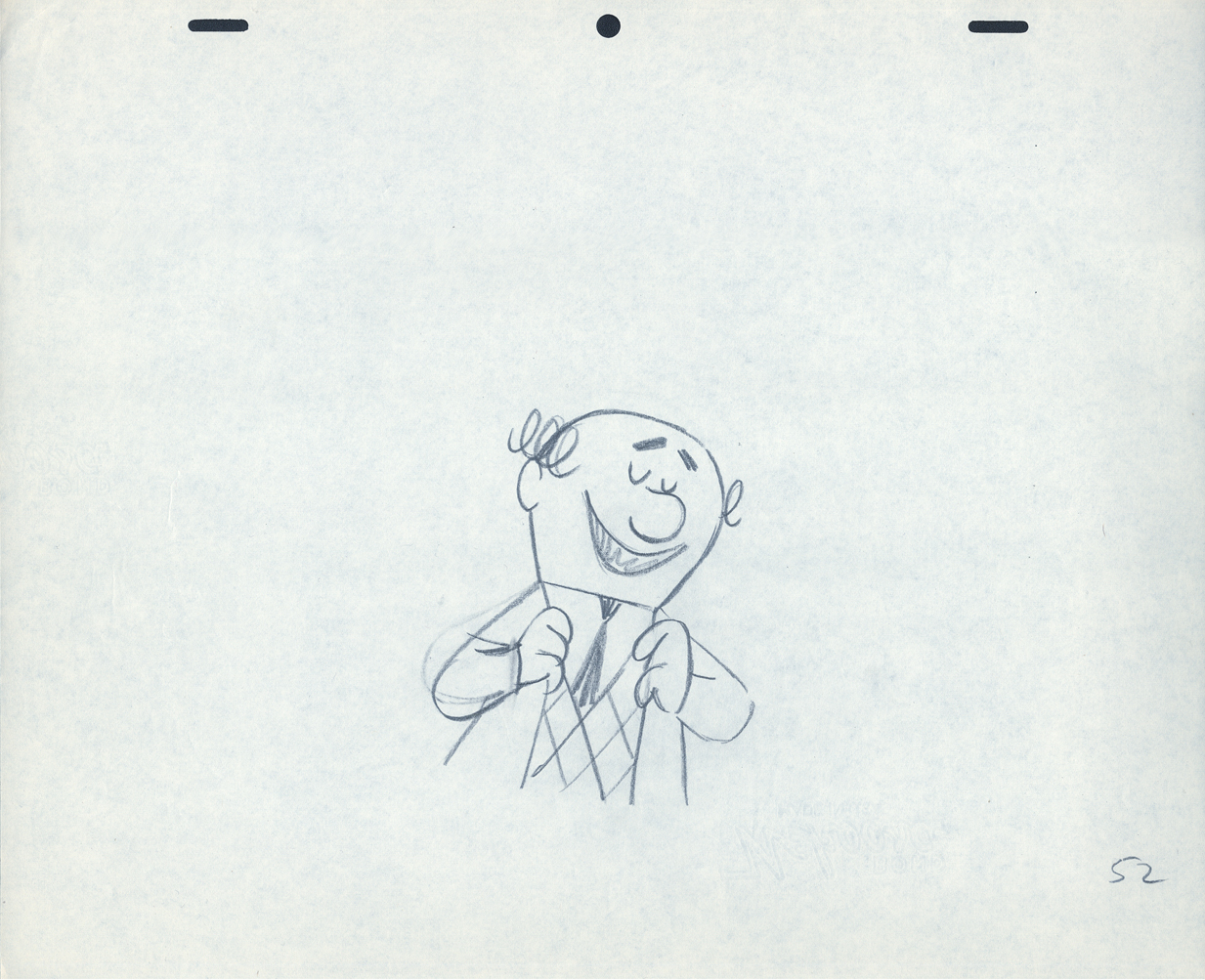
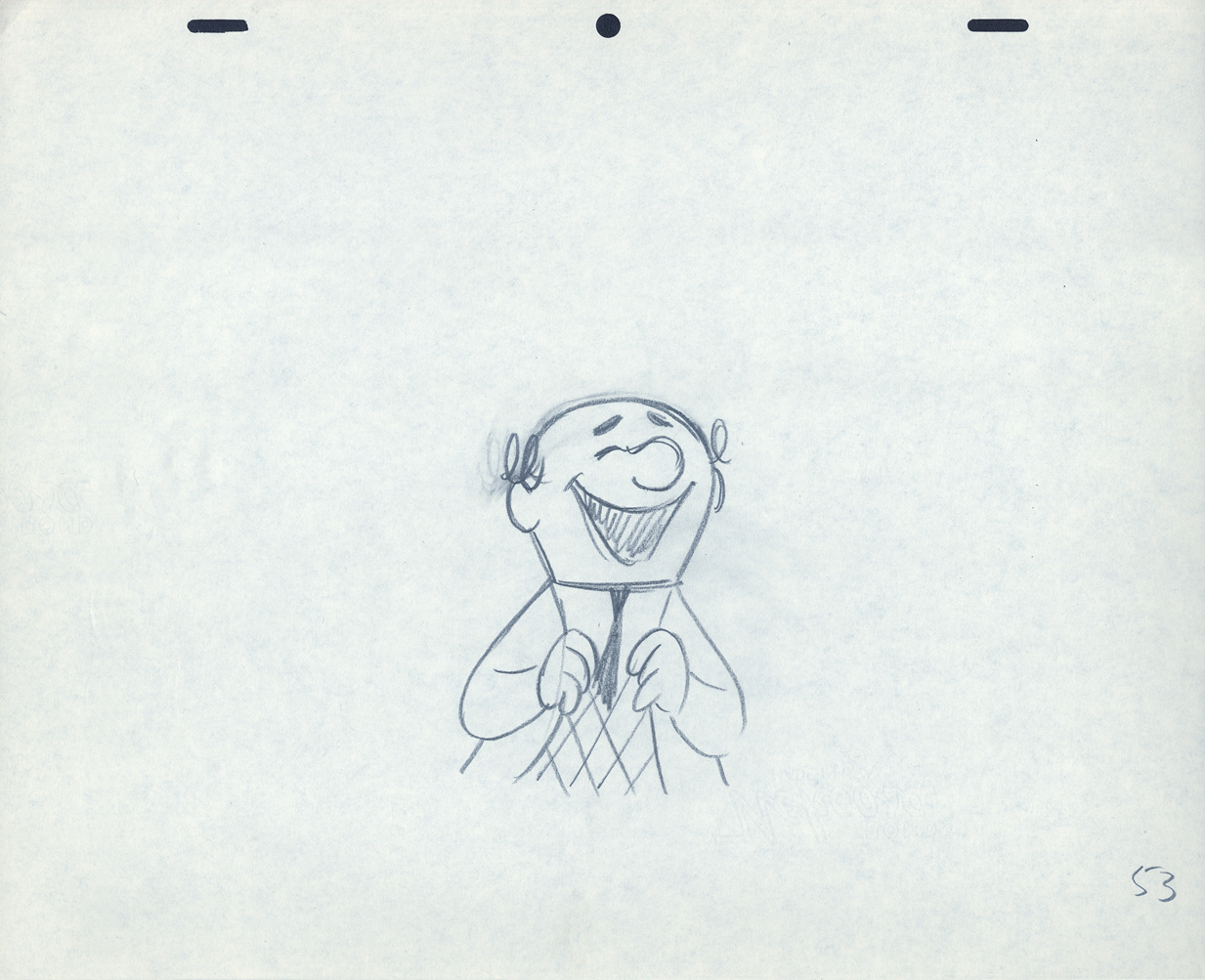
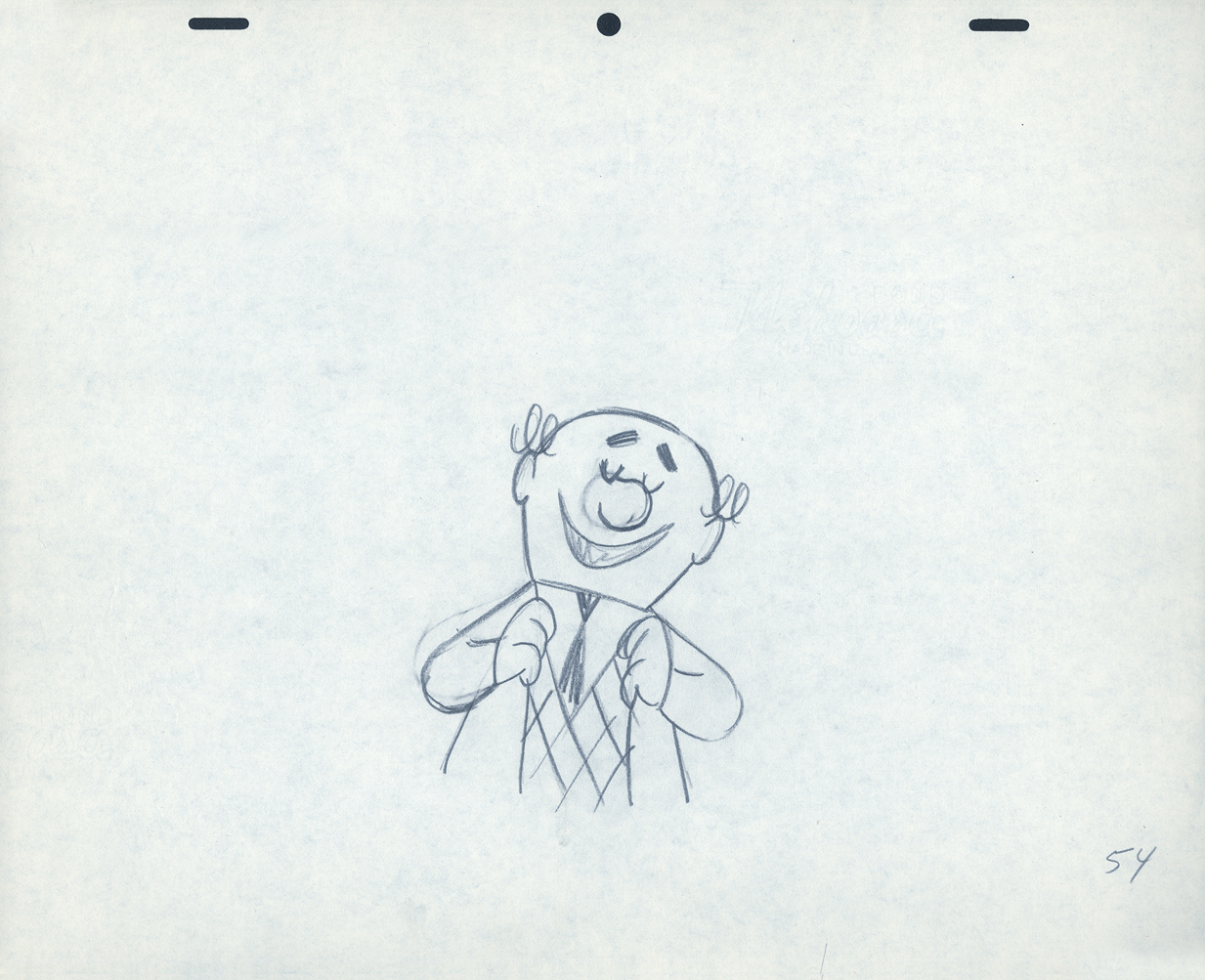
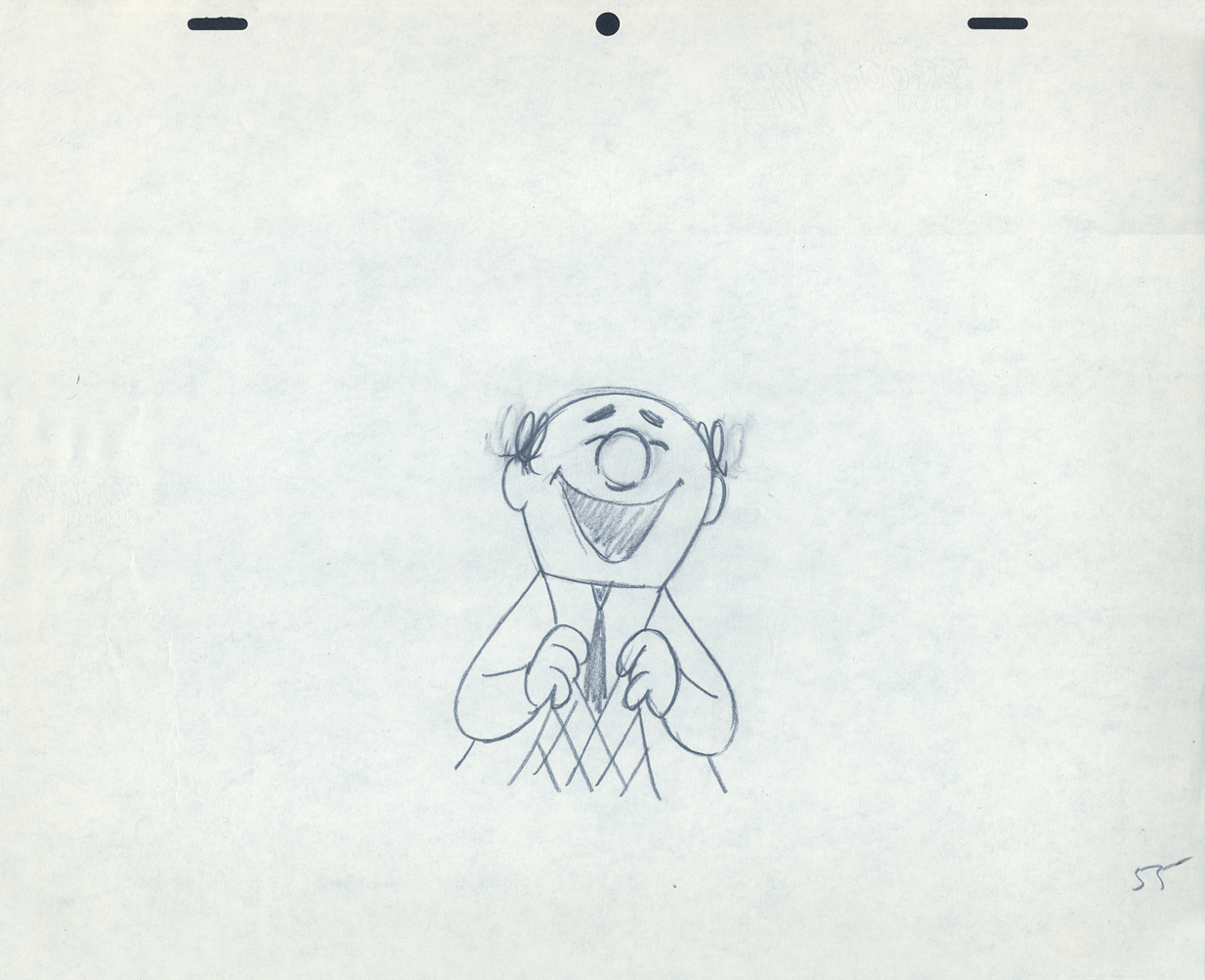
52
53 54
55 56
57
The following QT movie was made by exposing all drawings on twos
except for the extreme positions that were missing inbetweens.
For those, I dissolved from one extreme to the next.
It drove me crazy that Lu Guarnier always animated on top pegs.
Next week with the last of these three posts on this Piels Bros commercial, I’ll talk about Lu’s animation and some of my pet peeves.
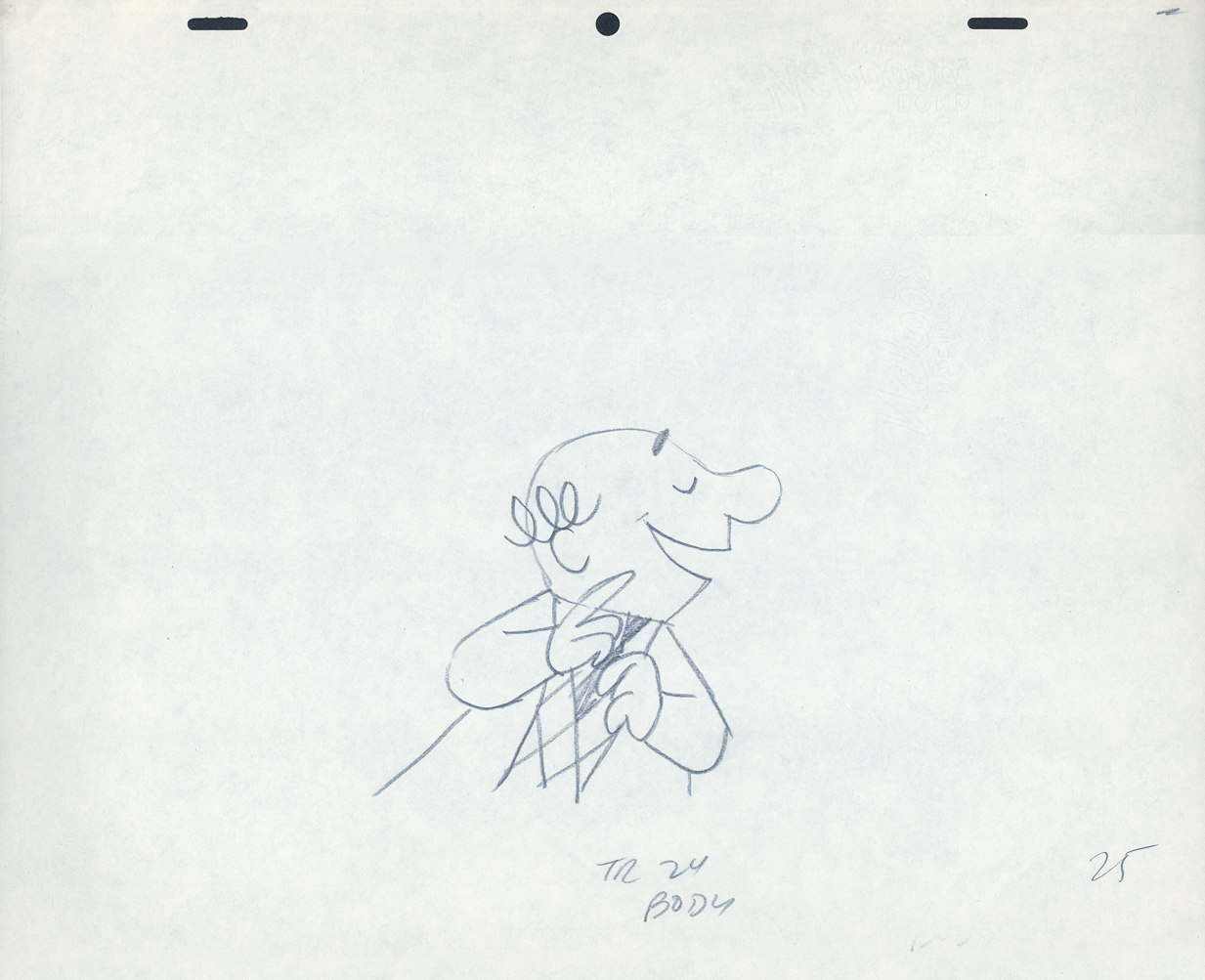
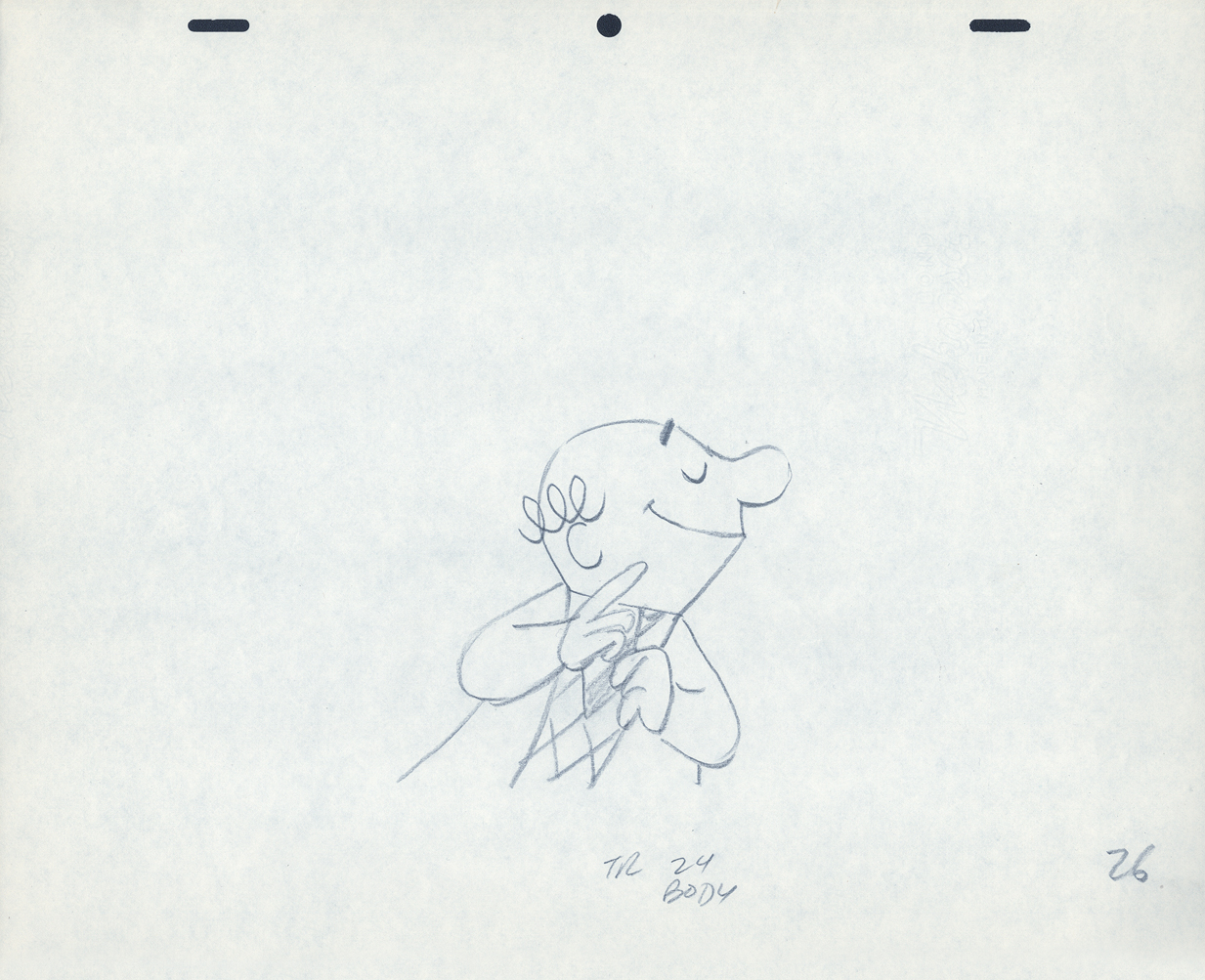
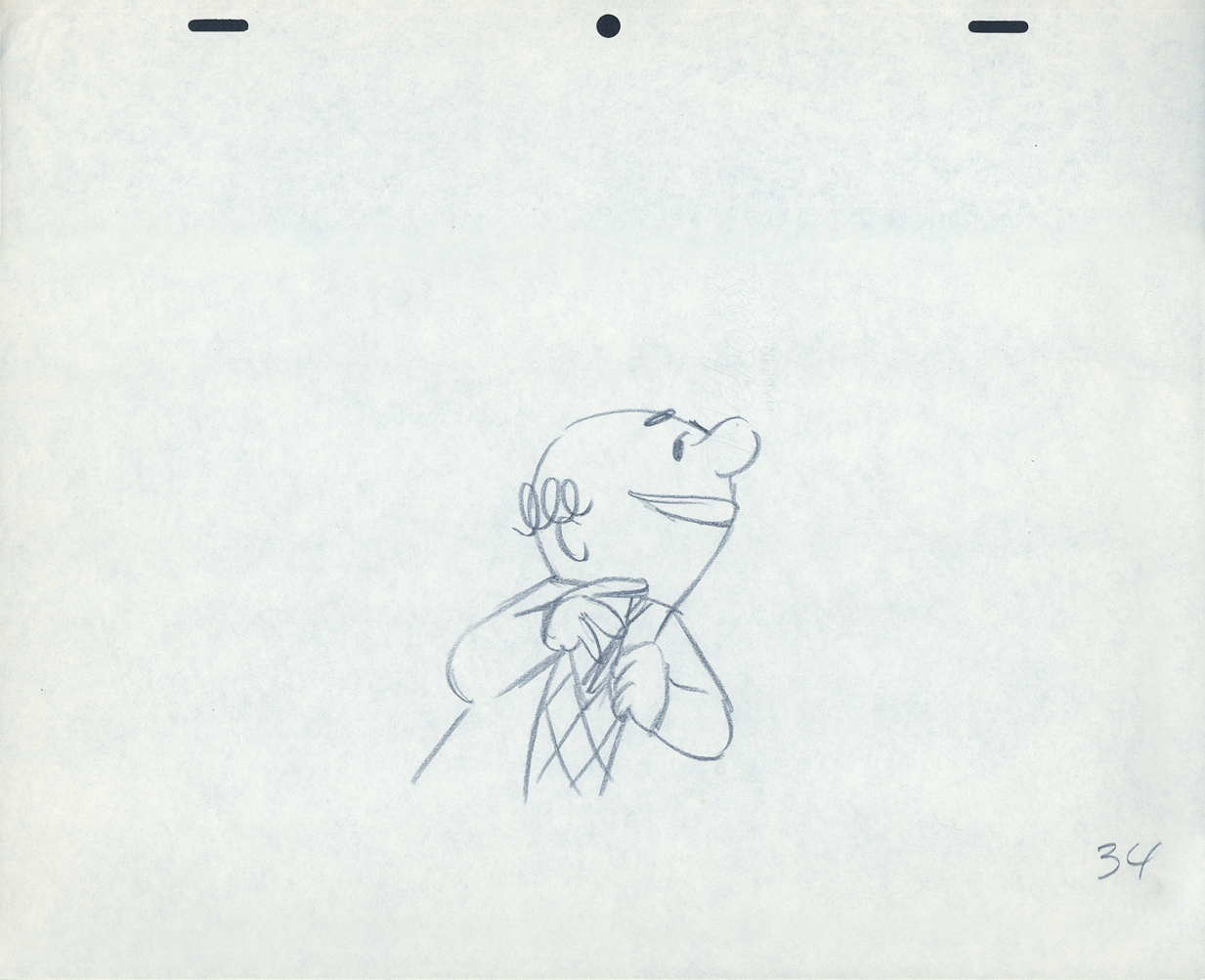
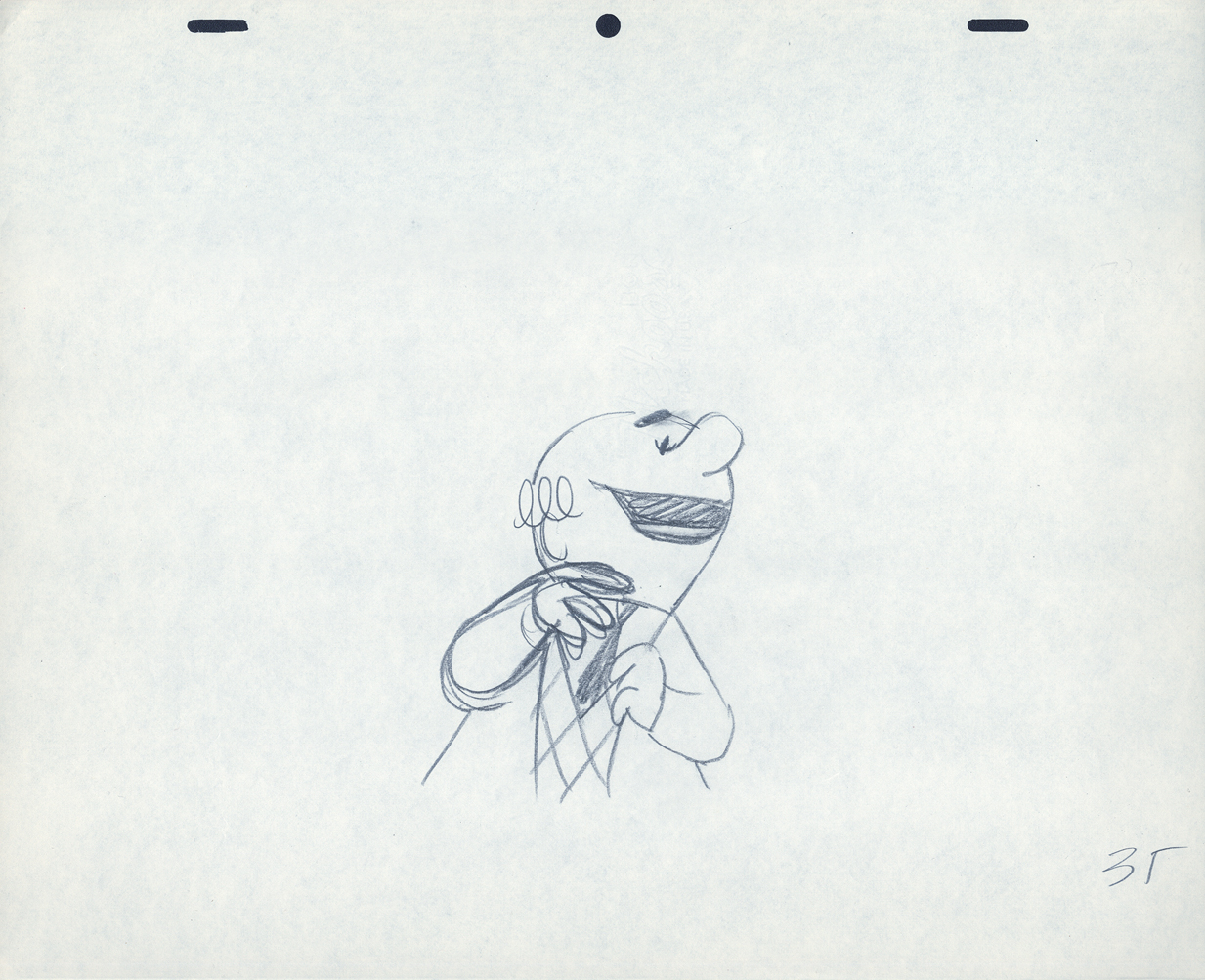
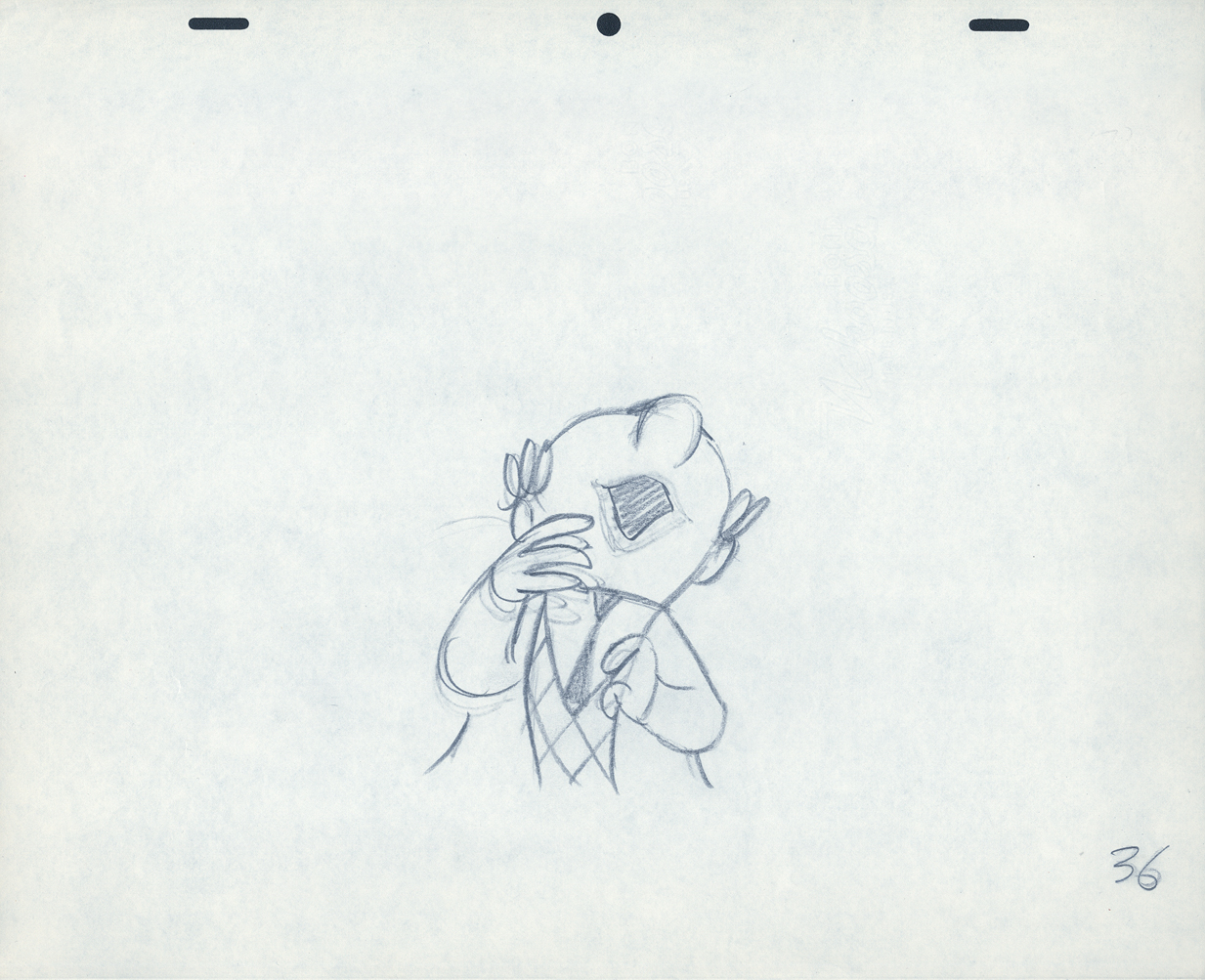
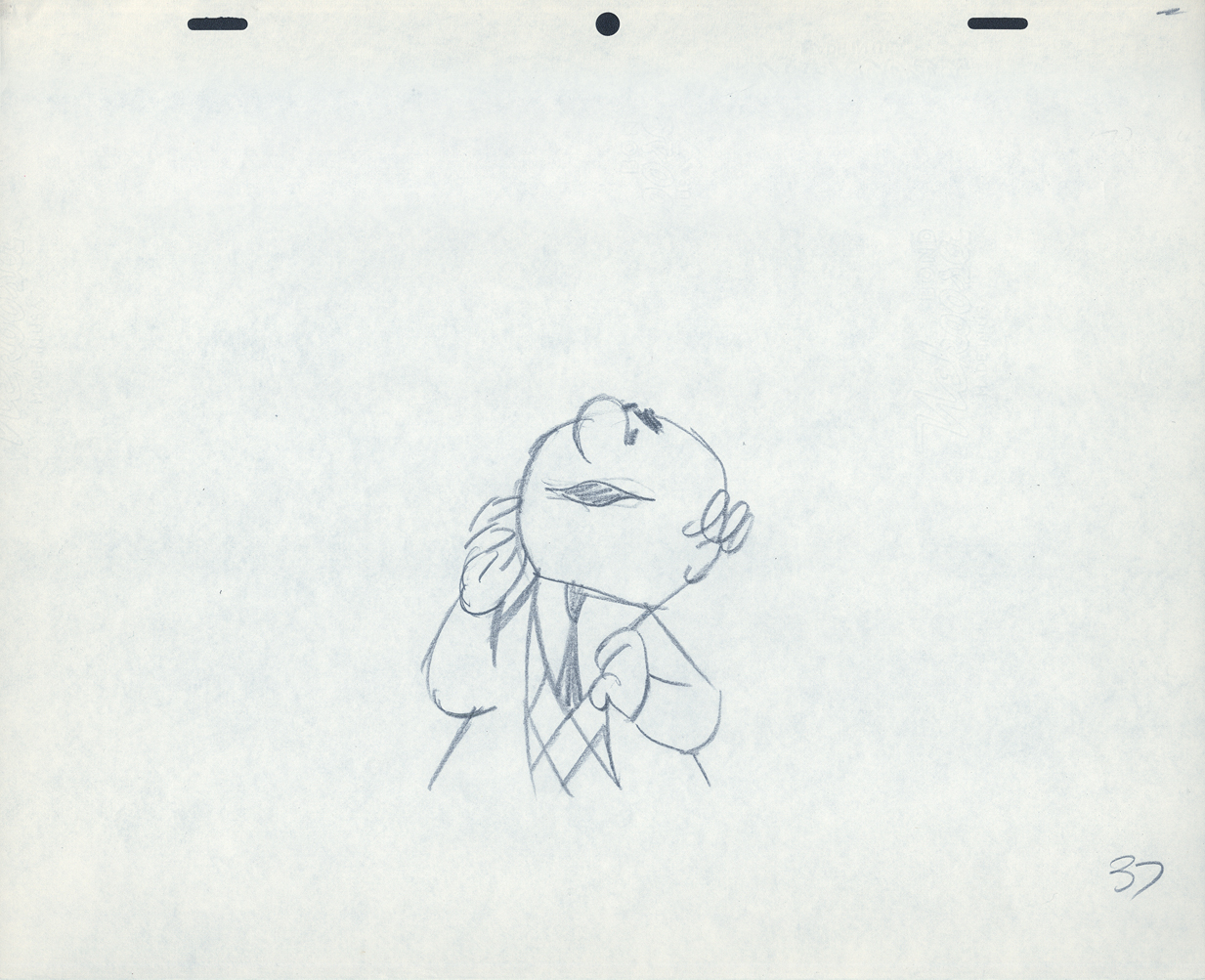
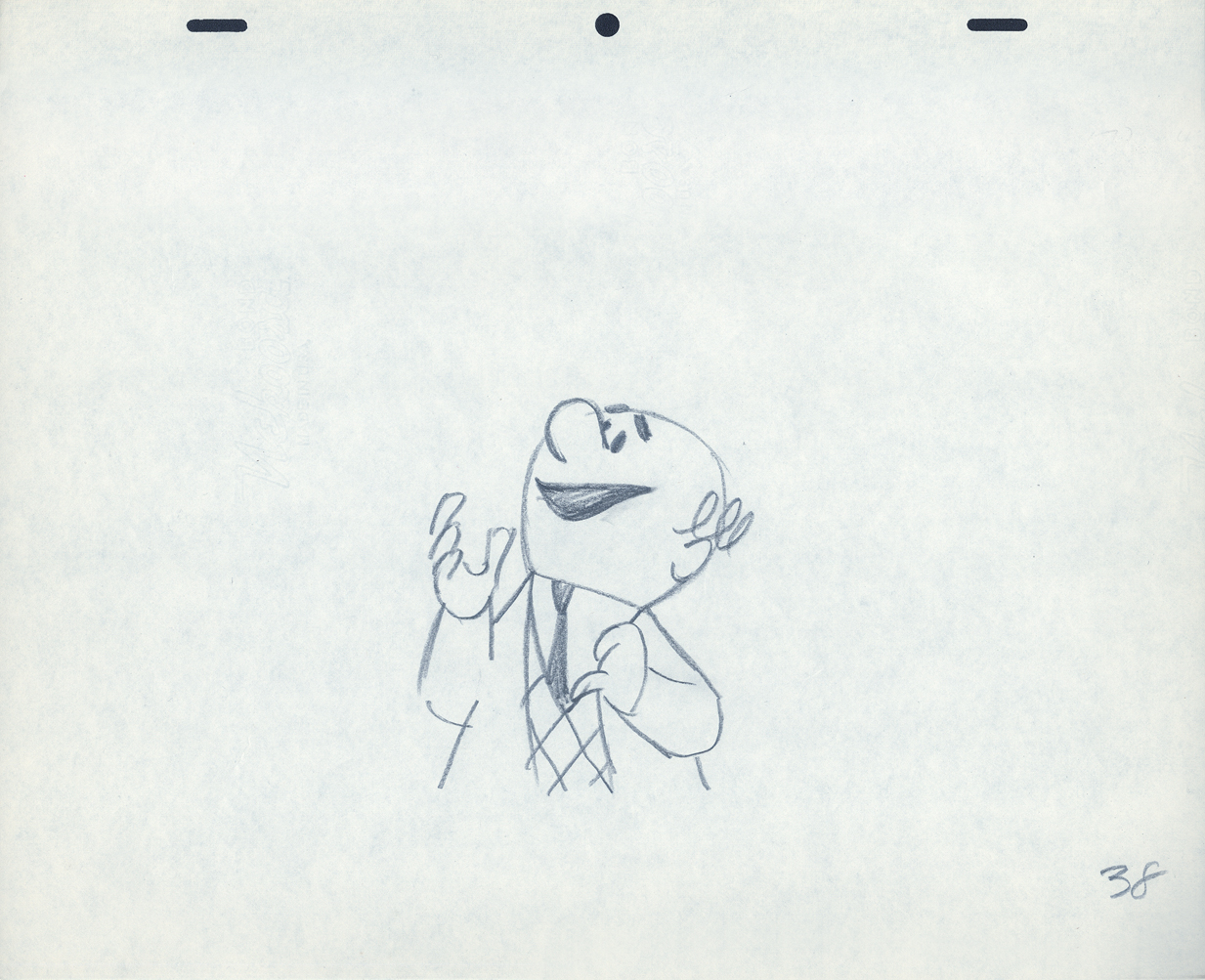
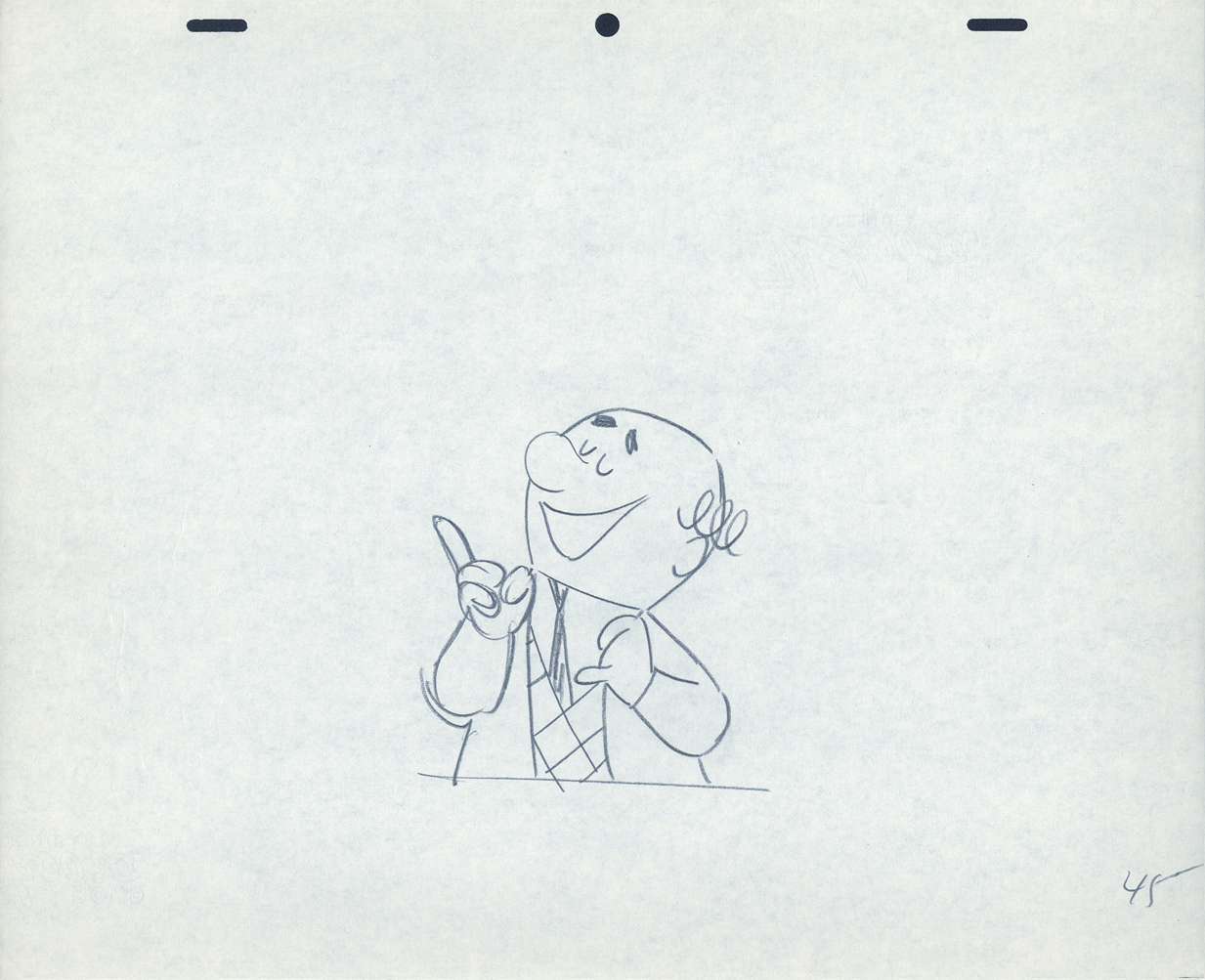
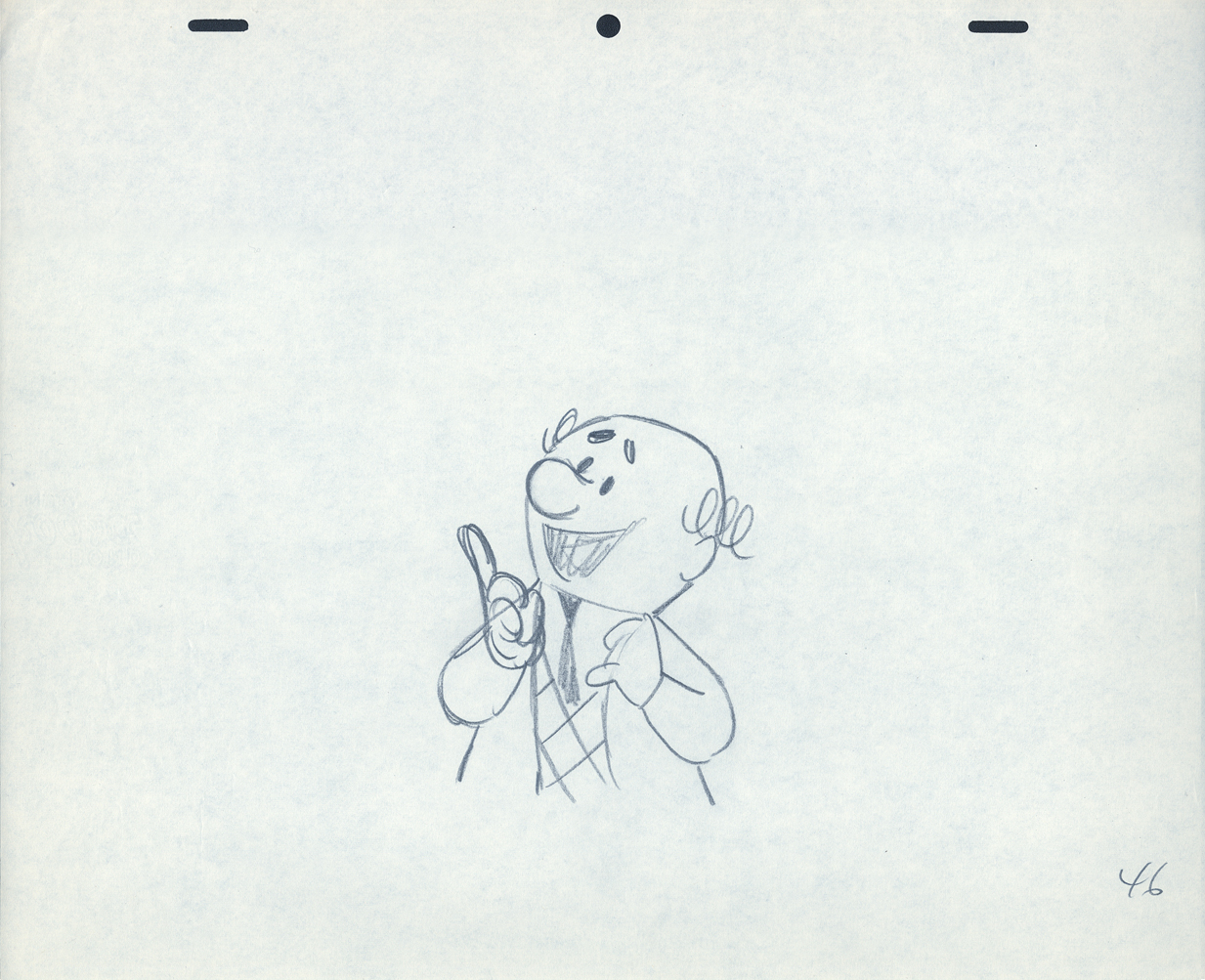
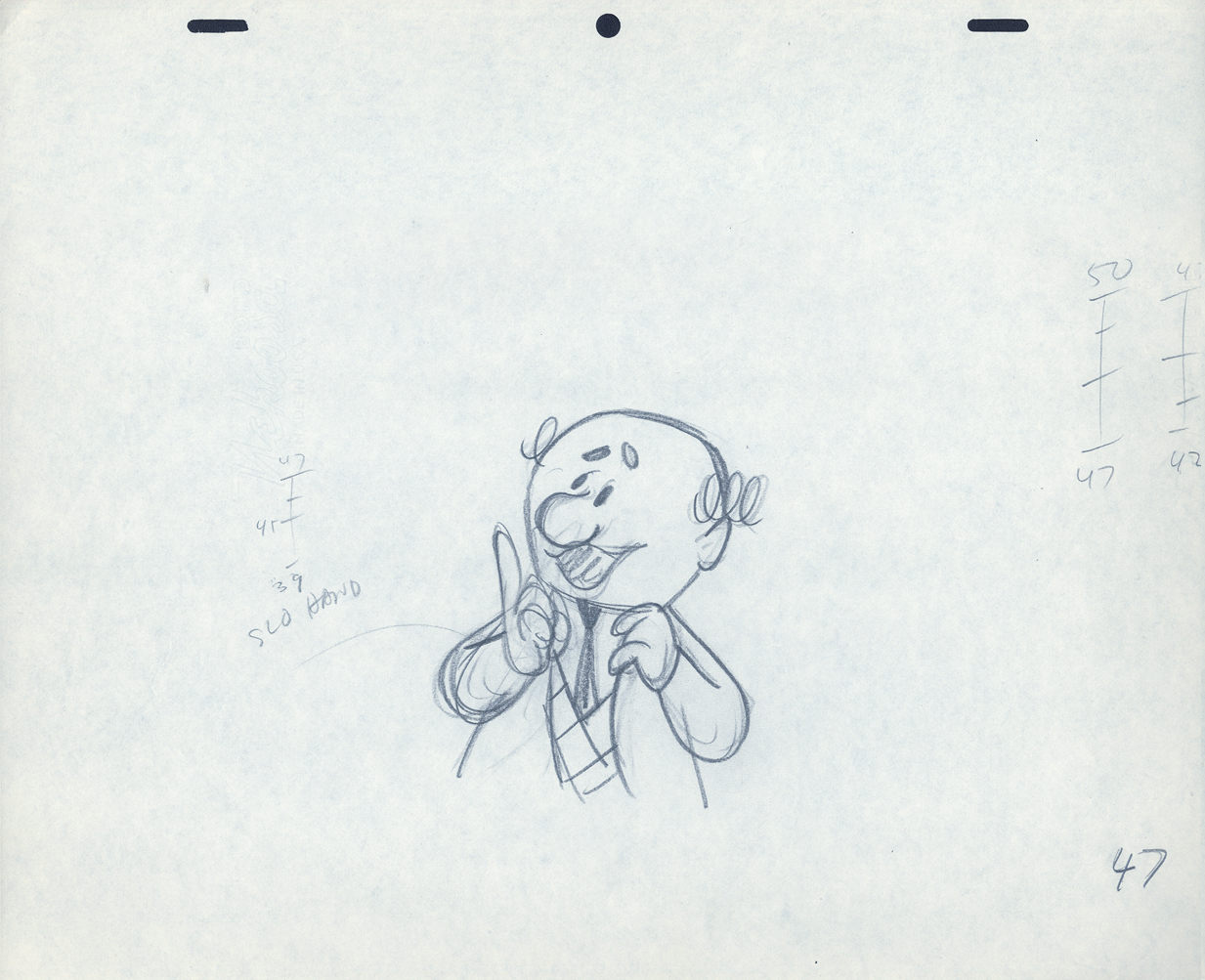
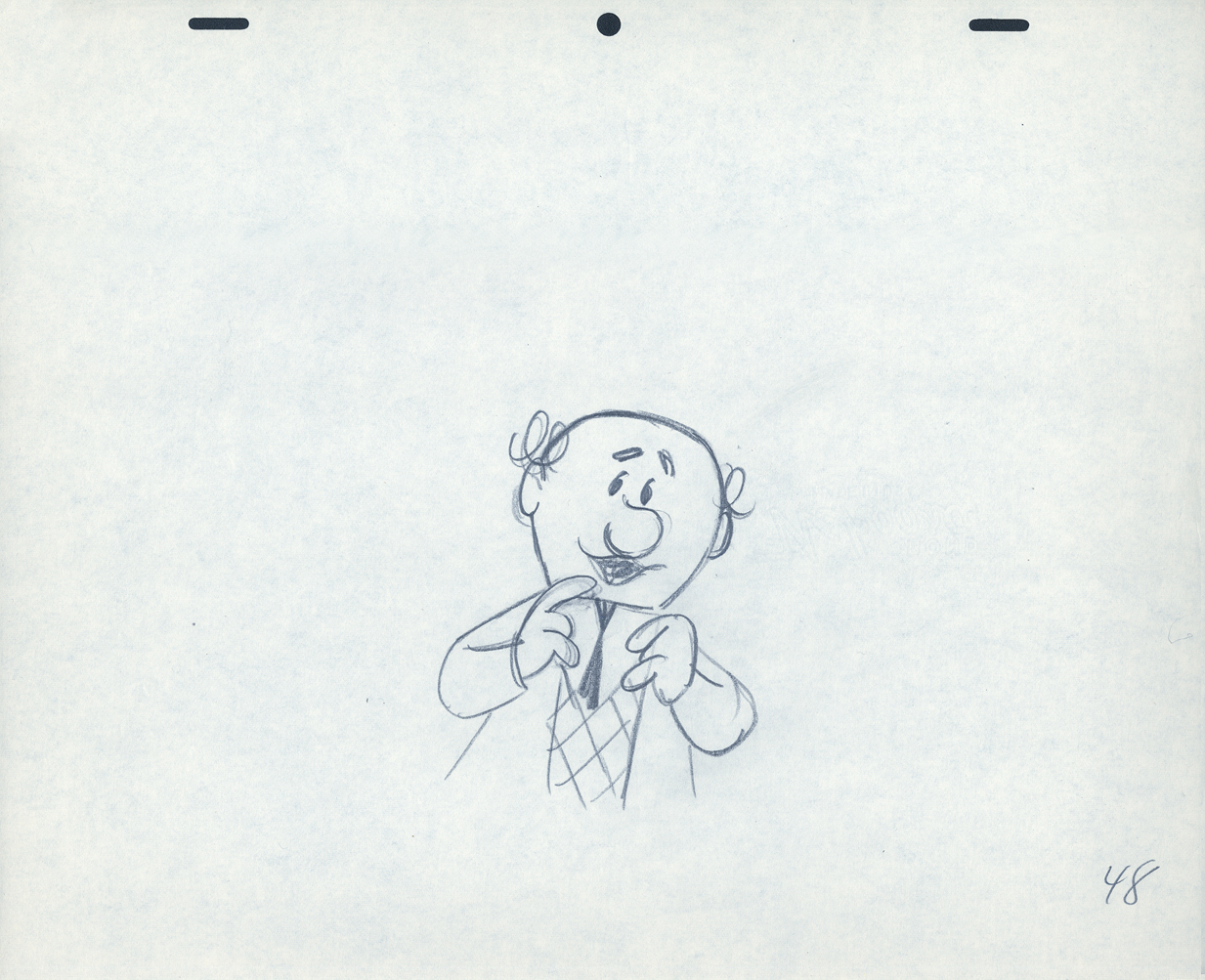
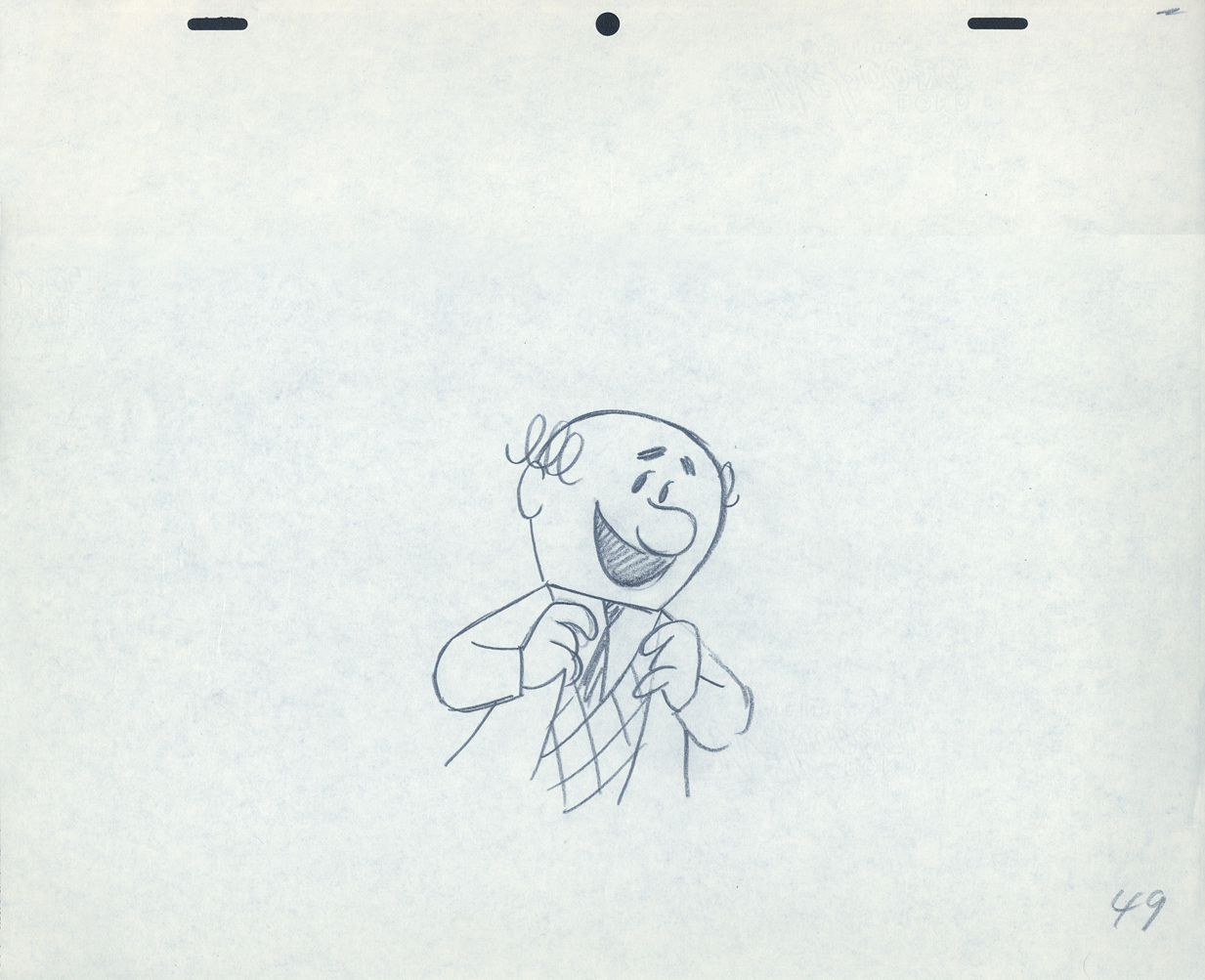
Here’s the last of the three posts I’ve been able to cull from the drawings left behind in Vince Cafarelli‘s things. The 60 second spot was animated by Lu Guarnier and clean-up and assisting was by Vinnie.
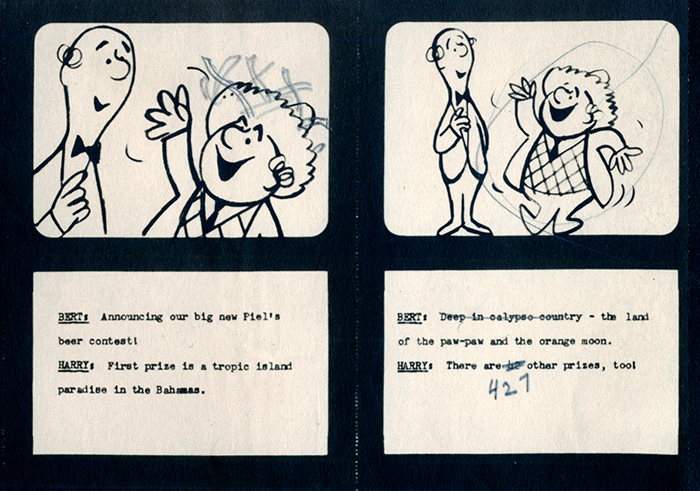
Within this post there are drawings from two separate scenes. If you look at the storyboard (I’d posted the entire board in another post, but I’ve pulled the particular frames from the board to show again here), you can see what it is the characters are saying. I don’t have all the drawings for these two scenes; just those I’ve posted.
I’m also going to use these drawings of Lu’s to write about his style of animation. I was taught from the start that this was completely done in an incorrect way. I don’t mean to say something negative about a good animator, but it is a lesson that should be learned for those who are going through the journeyman system of animation.
Right from the get-go I had some difficulty assisting Lu’s scenes. He started in the old days (early-mid Thirties) at Warner Bros, in Clampett’s unit, and moved from there to the Signal Corps (Army); then to New York working at a few studios before landing at UPA’s commercial studio. After that, he free lanced most of his career, as had so many of the other New York animators. They’d work for six months to a year at one studio then would move on to another.
I suspect the problems in Lu’s animation all generated from the training he’d gotten at WB. Lu worked in a very rough style. No problem there. An animator should work rough. These drawings posted aren’t particularly rough, but in his later years (when I knew him) there was hardly a line you could aim for in doing the clean-up. His style was done in small sketchy dashes that molded the character. Rarely was it on model, and always it was done with a dark, soft leaded pencil. There were others who worked rougher, Jack Schnerk was one, but Lu’s drawing was usually harder to clean up.
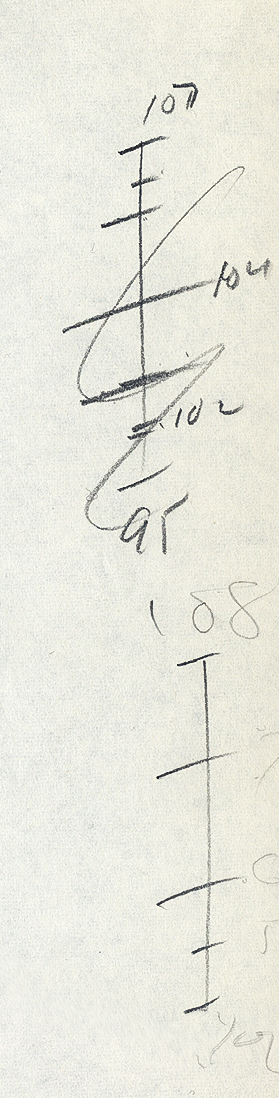
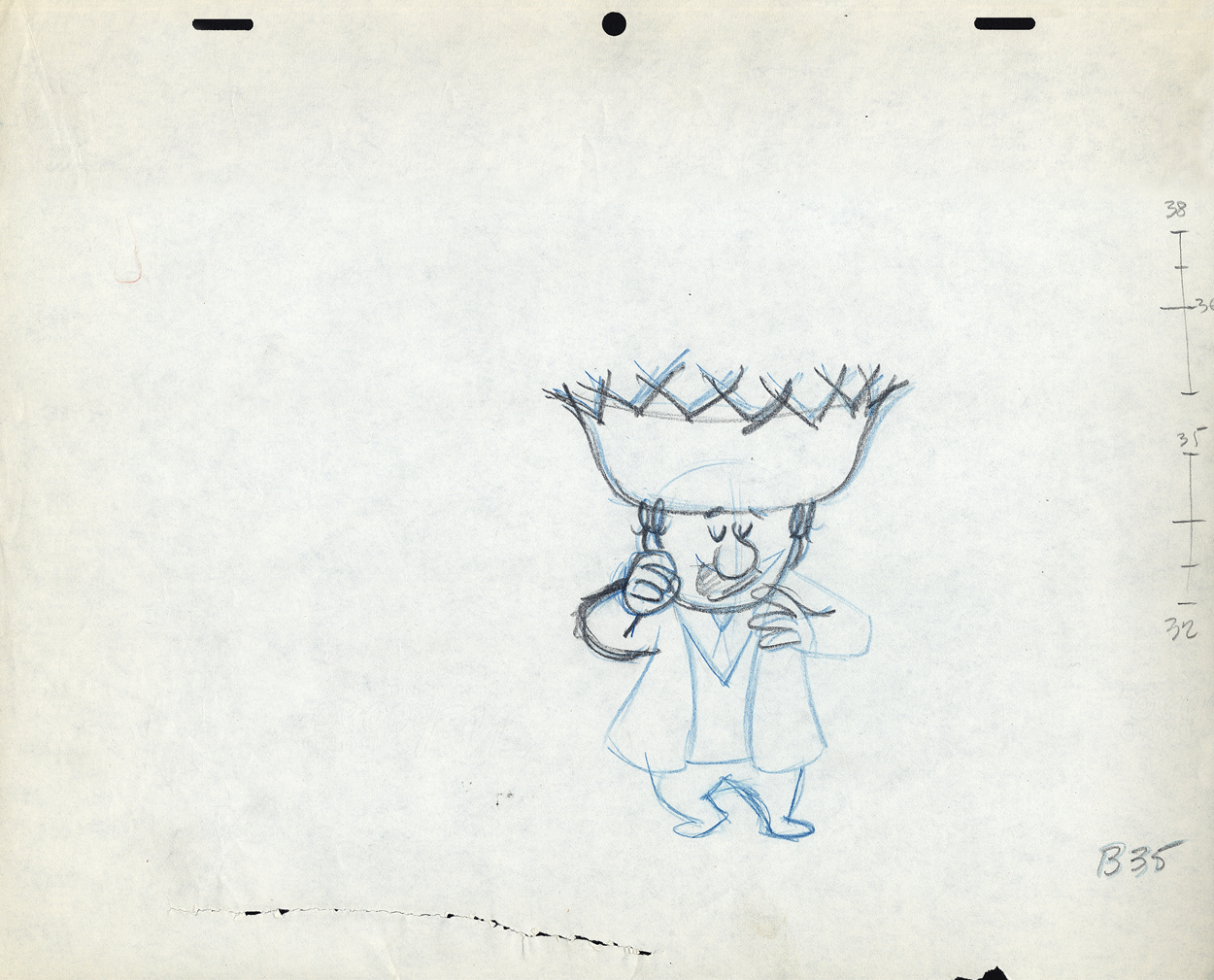
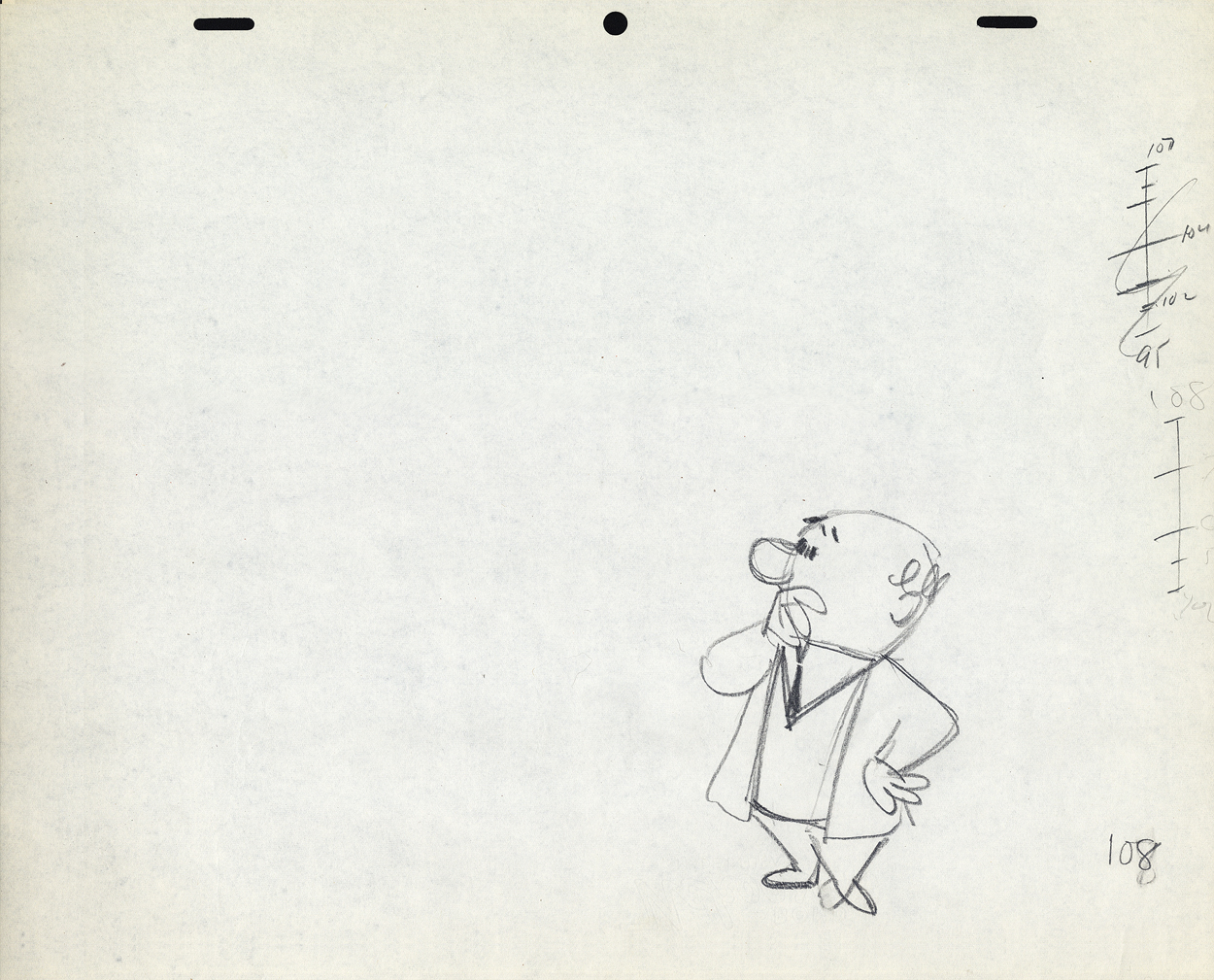
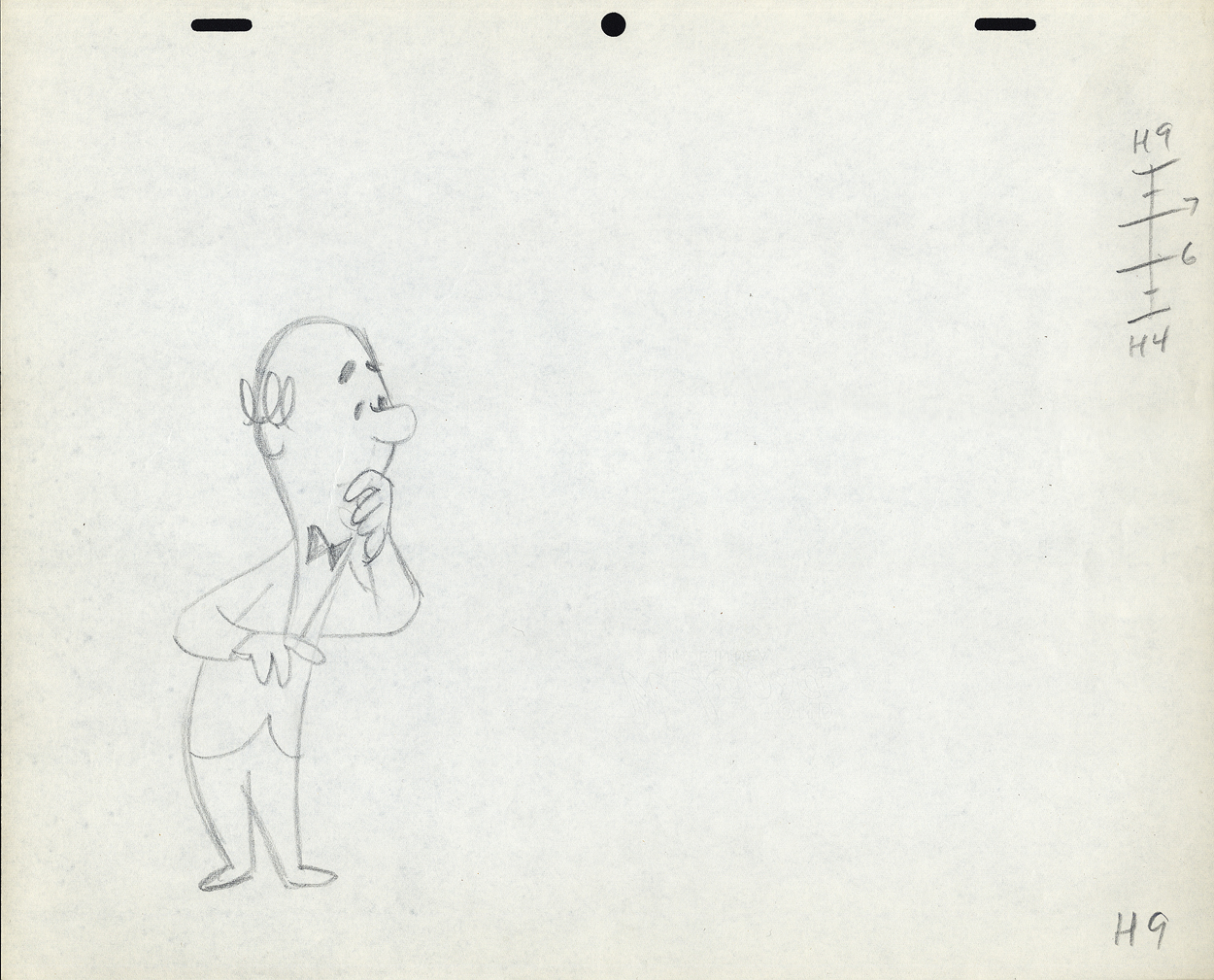
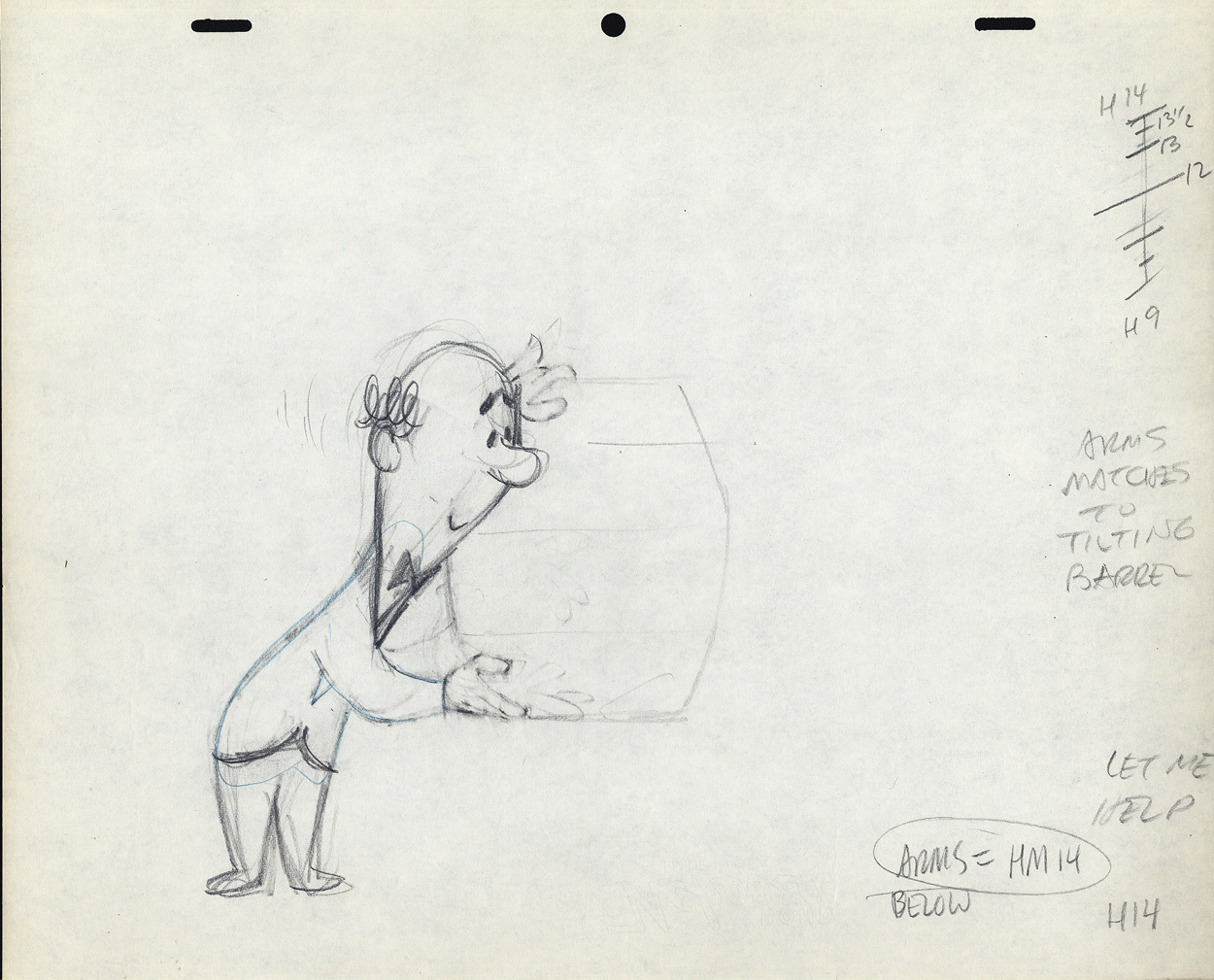
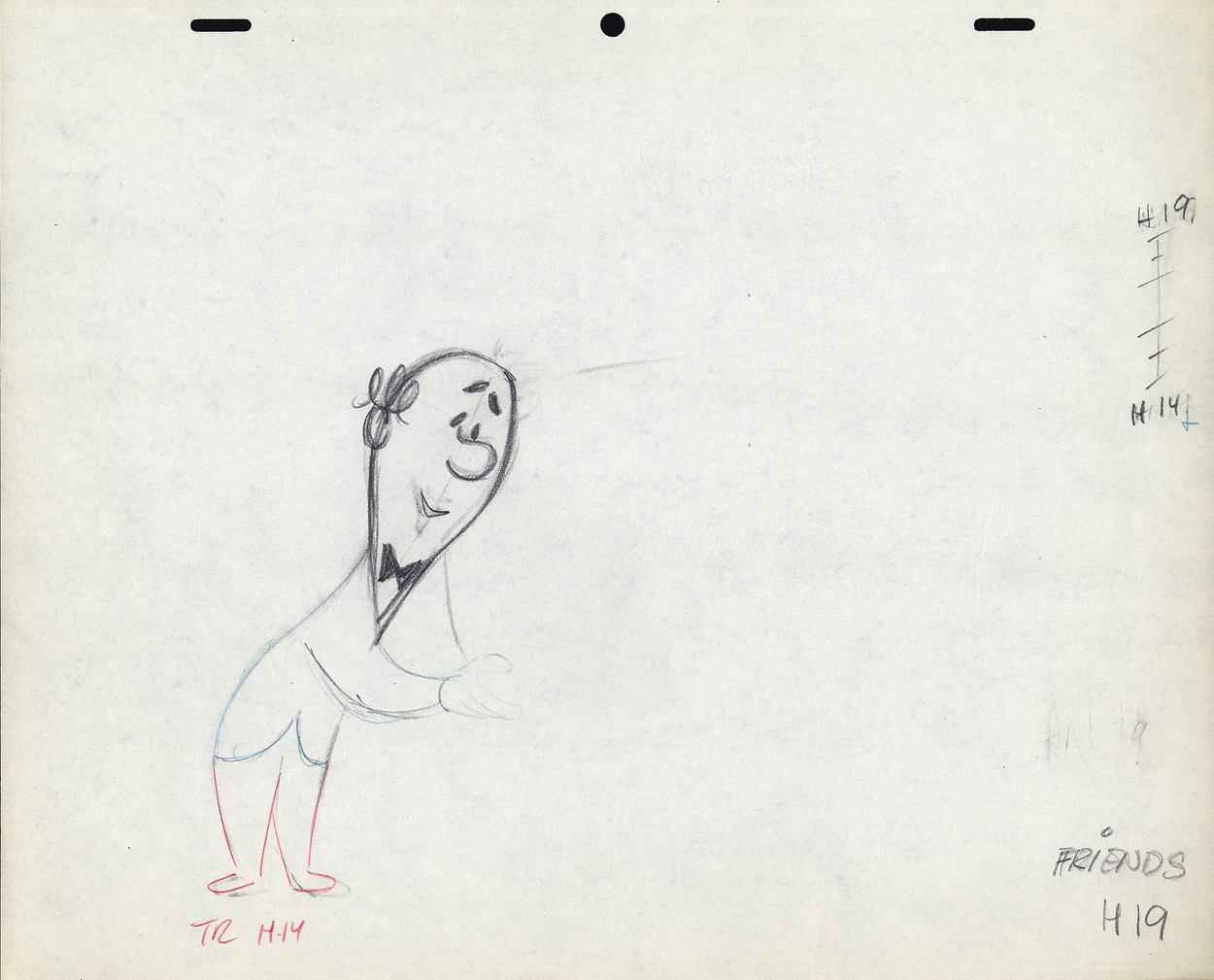
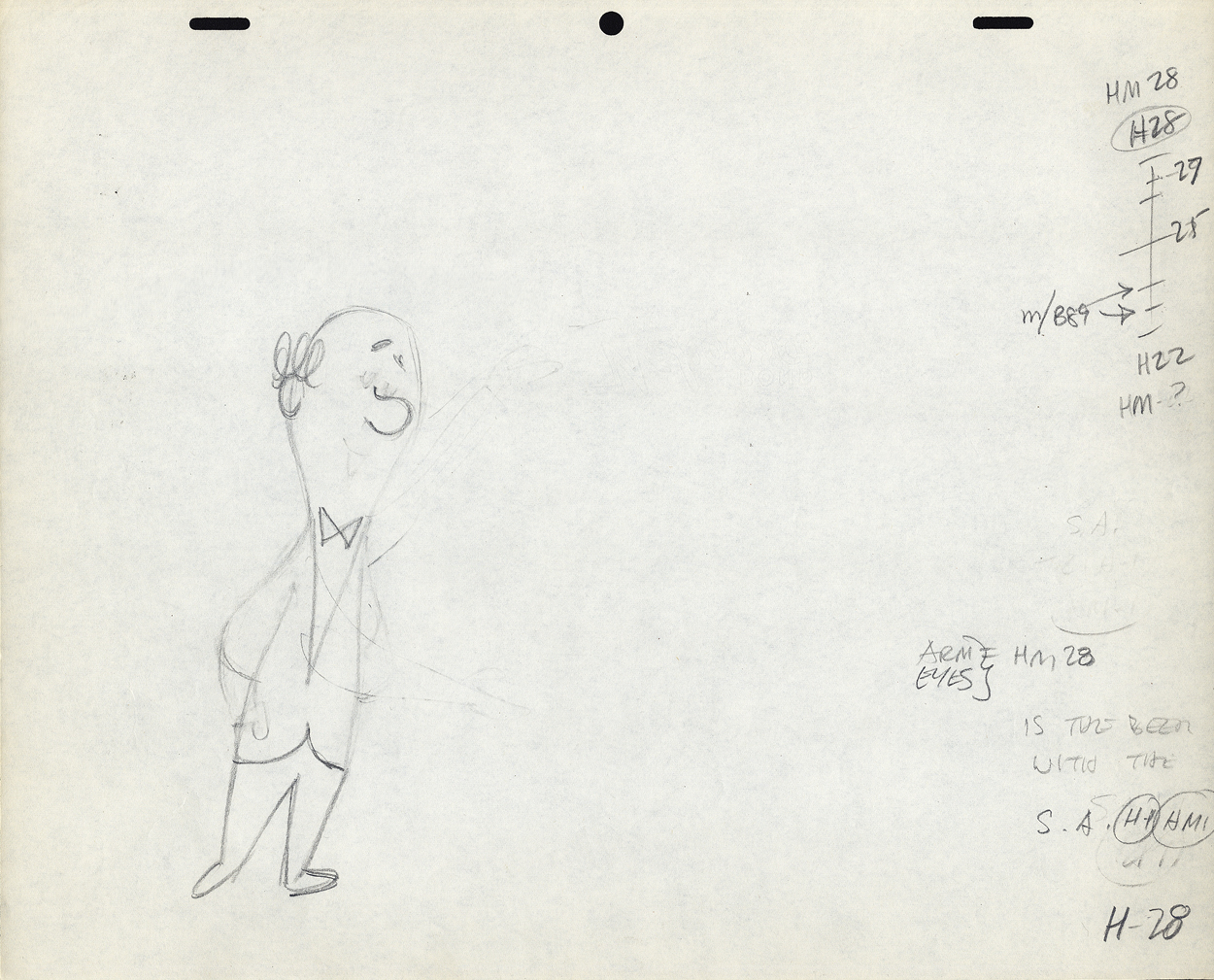
There was a rule that came out of the Disney studio, and, as both an animator and an assistant, I’ve followed it closely. When doing the breakdown charts (those ladders to the right of the drawing) all inbetween positions had to be exactly half way between drawing “A” and drawing “B”. If the animation called for it to be 1/4 of the way, you’d indicate that half-way mark then indicate your 1/4. If a drawing had to be closer or farther away – say 1/3 or 1/5th of the way – the animator should do it himself. This, as I learned it, was the law of the land. However, Lu would rarely adhere to it, and an assistant’s work became more complicated. The work was too easily hurt by a not-great inbetweener. I’ll point out an example of Lu’s breaking this rule as we come to it).
The First scene
bd.1
H1
B7
B35
These ladders are done correctly, per the Disney system.
#34 is half way between #32 & #35;
#33 is half way between #32 & #34.
#36 is half way between #35 & #38;
#37 (the 1/4 mark) is half way between #36 & #38.
However, Grim Natwick told me
- demanded of me –
that all ladders should appear on the lower numbered drawing.
The ladder here should be on drawing #32 for all art
going into the upcoming extreme, #38.
Lu never followed this rule, which means the
assistant generally had to search for the chart.
The Second scene
bd.2
B108
This ladder is typical of Lu’s animation.
It would seem that #106 is 1/3 of the way between #108
and #105 is half way between #106 and #109.
and it also looks like #107 is 2/3 of the way between #108 and #109.
Because the numbers come on the last of the extremes, here,
more confusion is allowed to settle in.
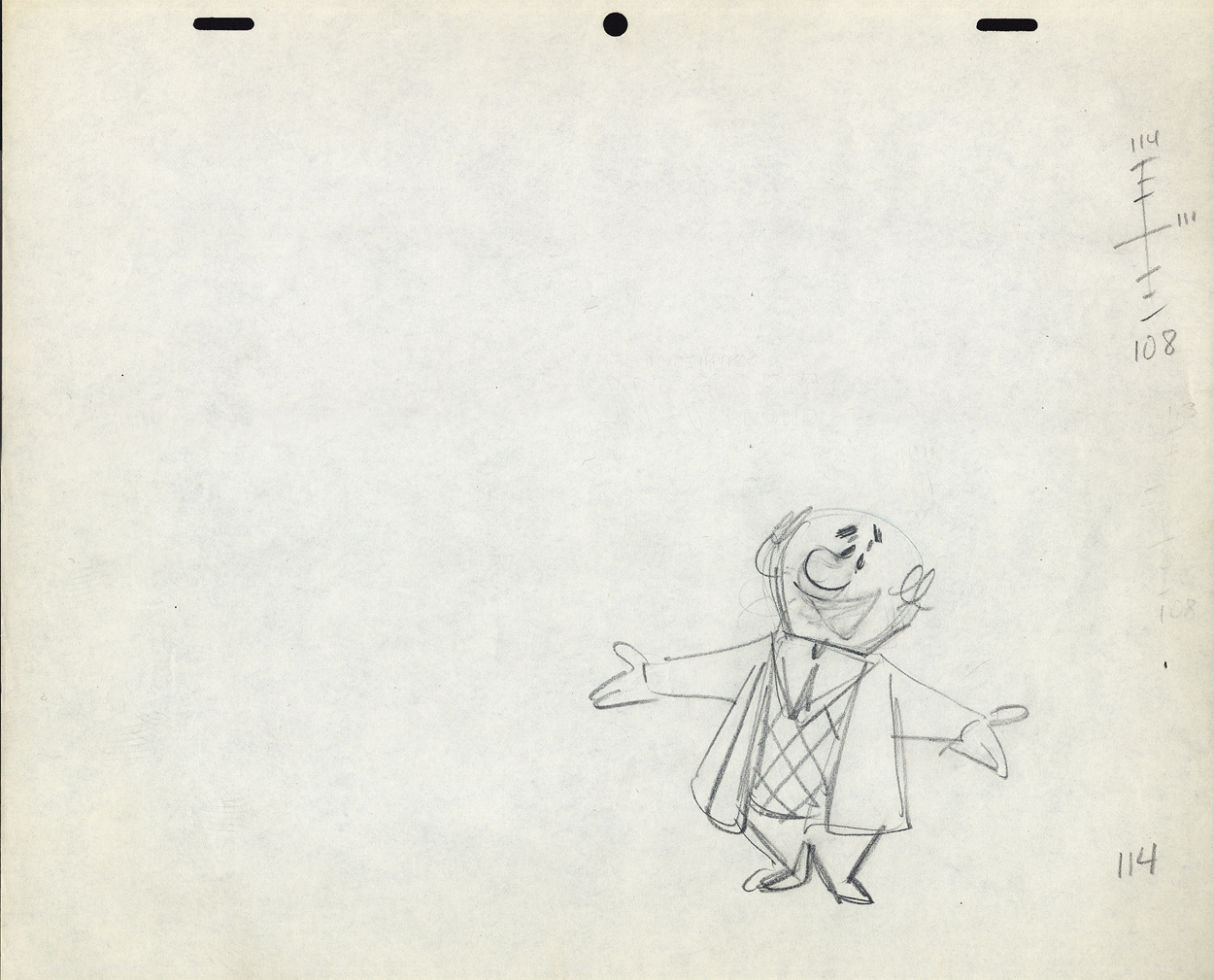
B114
H1
H4
H9
Again, the ladder appears on the later extreme. The assistant
shouldn’t have to go looking for it. The ladder should be on
the first drawing involved in the breakdown.
Again, the breakdown drawings are on 1/3′s, and
the inbetweens are 1/2′s of that. It makes it harder on the
people following up on the clean-up & inbetweens.
H14
H19
H28
H33
H34
I don’t know if this style of Lu’s was a product of where he learned to animate or not. Jack Schnerk, a comparable animator – whose work I loved (even though he had a rougher, harder to clean up drawing style) – always broke his timing in halves and halves again. There were times when his animation went to one’s and he did most of all the drawings. I assumed he had an unusual timing, and he didn’t want to burden the Assistant with his schema. He also always carried the breakdown charts on the earlier numbered drawing – per Grim Natwick’s comment. In some way I felt that Lu was rushed to get on with the scene, and whatever method he used would be to get him there more quickly. (It was the assisting that was slowed down.) This may have been a product of his attempts to devise some type of improvisation in the animation. Lu’s work, on screen, was usually excellent, so he didn’t much hurt anything in his method.
It might also have been his method of trying to put SNAP into the animation. This was a WB trait from the mid-late Thirties. It was certainly in Lu’s animation. No doubt a hold-over from Clampett’s early days of directing.
The final thing to note is that Lu usually worked on Top Pegs. Animating on Top Pegs makes it impossible to “roll” the drawings and check on the movement of more than 3 drawings. You can only “flip” the three, checking the one inbetween, but it didn’t give you a good indication of the flow of the animation. This is obviously necessary in animating on paper. It also made it difficult for the cameraman as well as those following behind the animator. If there were a held overlay, this would have to be on bottom pegs since the animation is on top pegs. That requires extra movement of the expensive cameraman to change all the animation cels after lifting the bottom pegged overlay. It also risks the possible jiggling of the overlay as it’s continually moved for the animating cels.
Yesterday I met someone who is going to allow me to work on her film. It is a genius of an earth shattering film, and I am desperate to start on it. I hurt myself waking in the middle of the night banging my leg against the coffee table. Two hours later and it still hurts. I went to bed with this woman’s notion of an idea in my head, and it hasn’t stopped ringing in. I will kill myself to make this film now, soon, quickly. It needs to be made. Immediately. Now.
I cried because I thought the audience wouldn’t give it the necessary third round of applause. But they did. Again and again and again and more. They saw the film we had made in my dream.
I am going to make an 11 minute short film with Mimi Brennan and praise god she came to me with it. It is the film I was made to make – with her, of course. I didn’t know you yesterday; today you have changed my life.
No, I won’t write about it again. But I will make sure every eye who sees me in the future will see this movie. Thank you god for giving me the time and the space. Thank you Mimi Brennan for coming to see me with your brilliant, great movie idea.
Thank you Heidi for supporting me. You took me back into the bed, though I was soaking wet and you understood my desperate need to make great a little piece of Art.
I tried hard, no, very hard to watch A Letter from Momo at the DVD box nearest me. This is an animated feature that G Kids, an organization that has taken on the task of distributing more adult-like film geared, now, toward children and has put films into running for nomination for the Oscar in recent year’s competition. Unfortunately,it wasn’t probable as my eyes see it, saw it and hope not to have to view it again. Momo is a good example of what they’re trying to put forward as intelligent prototype, but instead is more tedious.
I, on the otherhand, respect MOMO but wonder about its notion of excellence.
Ageless and not happy, the slow moving Anime-inspired animation they choose continues forward. Though there’s so little to say in some of these films. It’s tiresome and might I say tedious.
I sat through the film twice and actually considered a third viewing, but no, that wouldn’t have helped it for me; a lot of competent and tireless work moves ever forward. There’s too little to take with it. This is certainly uninteresting for children and I can’t imagine, many adults entertained, either. I wish I could say more for a film that puts so much work into its heart.This film should have started in live action and stayed that way. Any effects might have been more effective.
As one who prefers his animation straight (when Princess Mononoke over Tex Avery or The Illusionist over – god help us – Wall-E.
As long as we’re making odd comparisons, let’s continue for a bit more fun:
When the young Bob Hoskins overtakes his own performance as a live actor to compete with his own alter ego, that of that Hollywood’s biggest star and in Who Framed Roger Rabbit? and makes much less of him for the future in film. From Back to the Future to Piranha 3D to attracts as many people as Angels in the Outfield and even the brilliant Buckaroo Banzai Across the 8th Dimension. Only Christopher Lloyd could take a live action version of his animated self and be bigger. This is Hollywood with a capital STARDOM.
Well, back to that visit with Momo. Please send me a counter commentary if you have anything to say about it.
Here’s to Lloyd and Hoskins and other true geniuses who could understand what a Zemeckis wanted in these waters. A brilliant director who creates a four-way pass for Tom Hanks to break your heart. And he moves onto trash like Scrooge or Death Becomes Her to shed a tear for Hollywood.
God Bless that director who gives us a four-way crossing for Tom Hanks to break our collective hearts over the loss of Hollywood – now just another place for FedEx to stop and recall the dearth of Hollywood.